Search didn’t die. It split. Your customers are still looking for what you sell, they’re just doing it in four different places now. Only one of those is the Google results page you’ve spent years optimising for.
The other three are AI assistants, video platforms and social feeds. Each one decides what to show people using its own logic, and none of that logic cares much about your meta description. If you only optimise for the blue links, you’re showing up in a shrinking share of the places your buyers actually make decisions. This is what we now call AI search optimisation, and it’s the framework we walk every client through.
#Key summary
- Search has split into four surfaces: web, AI, video and social. Each needs a different play.
- Web search still rewards depth. Pick five money pages and build a cluster of supporting content around each one.
- AI search rewards completeness. Answer every sub-question a model checks before it answers a buyer.
- Video and social are search engines now, not broadcast channels. People query them directly.
- You can’t fix what you don’t measure. Track your visibility in AI answers the same way you track rankings.
- None of this replaces good SEO. It sits on top of it.
#Search has split into four places
Ten years ago there was one search box that mattered. Someone typed “emergency plumber Brisbane” into Google, and your job was to be near the top.
That’s not how it works now. The same person might ask ChatGPT to shortlist three plumbers and explain what a fair callout fee looks like. They might search TikTok for what a burst pipe actually sounds like. They might post in a Brisbane suburb Facebook group and take the first name three neighbours agree on. Google is still in the mix, but it’s one of four, and it’s often not the first stop.
The four surfaces are web search (Google, Bing), AI search (ChatGPT, Gemini, Perplexity, Claude, Copilot), video search (YouTube, TikTok) and social search (Reddit, LinkedIn, X, Instagram, Facebook). They pull from different signals and reward different behaviour. The trap is treating them as one job with four distribution channels. They’re four jobs.
Here’s the good news. Do the work properly on one surface and it feeds the others. AI assistants cite web pages. Social posts get indexed. Video transcripts get quoted. The effort compounds, as long as you’re deliberate about it and writing answer-first content throughout.
#Web search: build depth around your five money pages
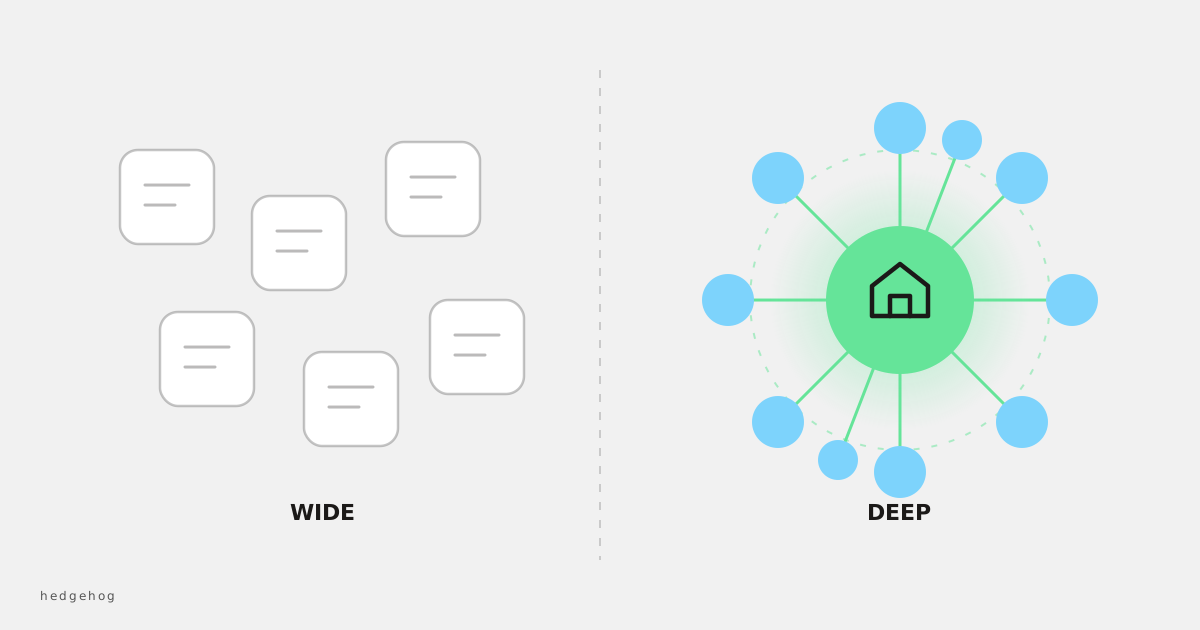
Most small business websites are wide and shallow. Twenty pages, one on every service, none of them supported by anything. Google reads that as a business that mentions a topic rather than one that owns it.
Fix it by picking your five money pages. Not fifteen. Five. These are the pages that make you money when someone lands on them, usually your core service pages or your highest margin product categories. Then write eight to twelve supporting posts around each one and link every single one back to the money page.
That’s a hub and spoke model, and it’s how topical authority actually gets built. The supporting posts answer the questions that surround the buying decision. The money page catches the person who’s ready. The internal links tell Google which page is the important one.
While you’re in there, sort your trust signals. Real author bios with real credentials. Reviews on the page, not just on your Google Business Profile. A visible “last updated” date so nobody has to guess whether your 2022 pricing guide still applies. And check the whole thing on a phone, because that’s where most of your traffic already is. If you’re already wondering why your impressions are up but your clicks are down, this is part of the answer.
#AI search: answer the questions before the questions
Here’s the single most useful trick we give clients. Take one real buyer prompt, something like “what should I look for when choosing a physio in Sydney”, and paste it into ChatGPT. Then ask the model which sub-questions it checks before it answers.
You’ll get five to ten back. Cost. Qualifications. Whether you need a referral. Health fund rebates. How many sessions it usually takes. Those sub-questions are the model’s actual research process, laid out for you for free.
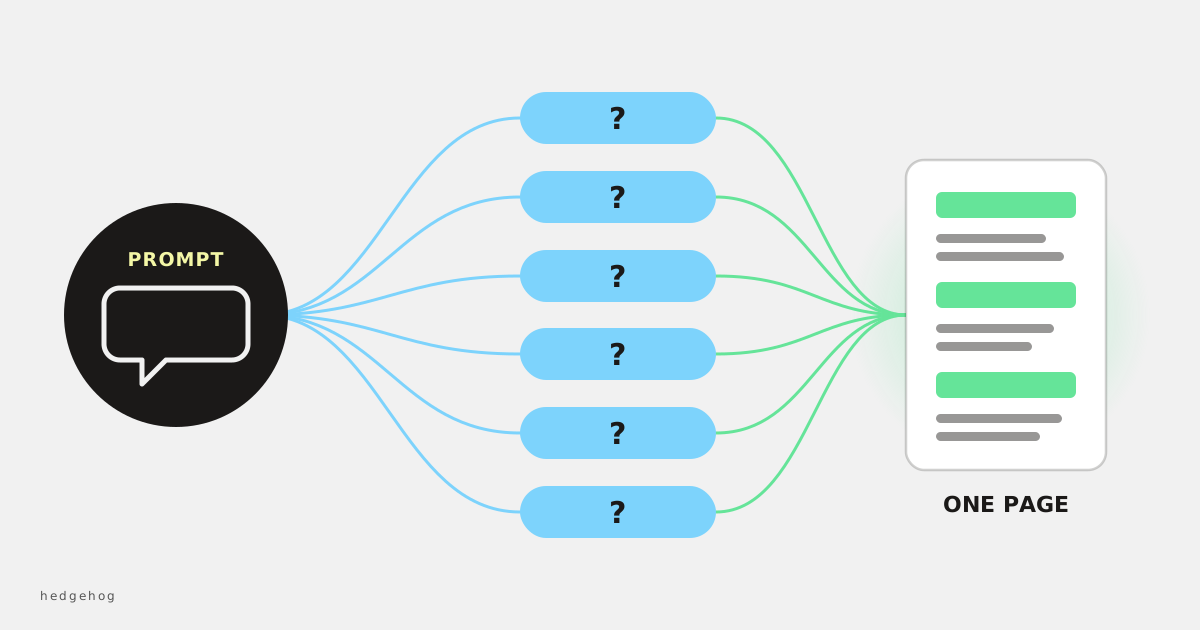
Now answer every one of them on a single page, each under its own H2. Not spread across six posts. One page that resolves the whole decision. That’s what gets pulled into an AI answer, because the model can satisfy the entire query from one source instead of stitching together four. For a deeper look at how to structure your site for generative engines, our GEO guide walks through the page-level specifics.
The second play is citation mining. Run your top thirty buyer prompts through ChatGPT and Perplexity, and export every domain that gets cited. You’ll find the same listicles coming up again and again: “best physios in Sydney”, “top 10 accounting firms Brisbane”. Find the ones where your competitor is included and you’re not, then email the editor and ask to be added. It’s unglamorous, it’s a bit like 2015 link building, and it works, because those listicles are what the models are reading. We’ve written more on how to get AI tools recommending your business if you want to go further.
Answer engine optimisation, generative engine optimisation, GEO, LLM SEO. The industry hasn’t settled on a name yet. The work is the same either way.
#Video search: film once, cut four ways
YouTube is the second largest search engine in the world and it’s been that way for years. TikTok search is now competitive for how-to queries, particularly with anyone under 35, and how TikTok search actually ranks videos is different from Google. People are typing questions into both, not scrolling and hoping.
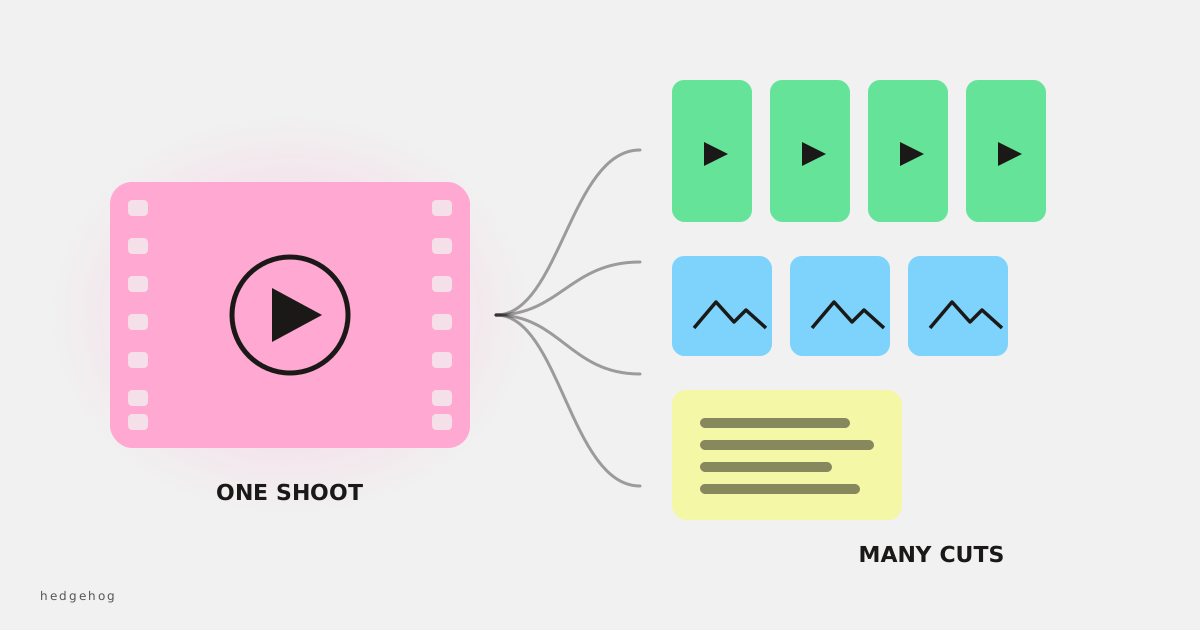
You don’t need a content studio. You need one solid long form piece a month and the discipline to cut it up. A ten minute explainer becomes four sixty second verticals, six stills with a quote on them, and a written post. Same thinking, four formats, four surfaces.
Two things move the needle more than production quality. First, study what’s already working in your category and adapt the format, not the content. If a format is getting reach, it’s getting reach for a structural reason, usually the first three seconds. Second, fix your on screen text. Most people watch on mute. If your point only lands with sound on, it doesn’t land.
#Social search: turn up, don’t broadcast
Reddit threads rank on page one for an enormous number of commercial queries, and they’re heavily cited by AI assistants. LinkedIn has its own internal search that behaves nothing like Google. Instagram and TikTok are where a chunk of the population goes to check whether a business is real before they call.
The mistake almost everyone makes is cross posting. One asset, five platforms, same caption. It flops on all five, because each community has its own idea of what belongs there. A Reddit post that reads like a press release gets buried in minutes. A LinkedIn post that reads like an Instagram caption gets ignored.
Do it the other way round. Show up in the communities where your buyers already are and be useful before you’re promotional. Answer questions properly. Then build for each platform separately, and reuse formats that have already gone viral in that specific community rather than importing one from somewhere else.
#How to tell if any of it is working
This is where most businesses fall over. You can see your Google rankings. You cannot see, in standard Google Analytics, that ChatGPT recommended you to four hundred people last month. Or that eleven of them then typed your name straight into a browser.
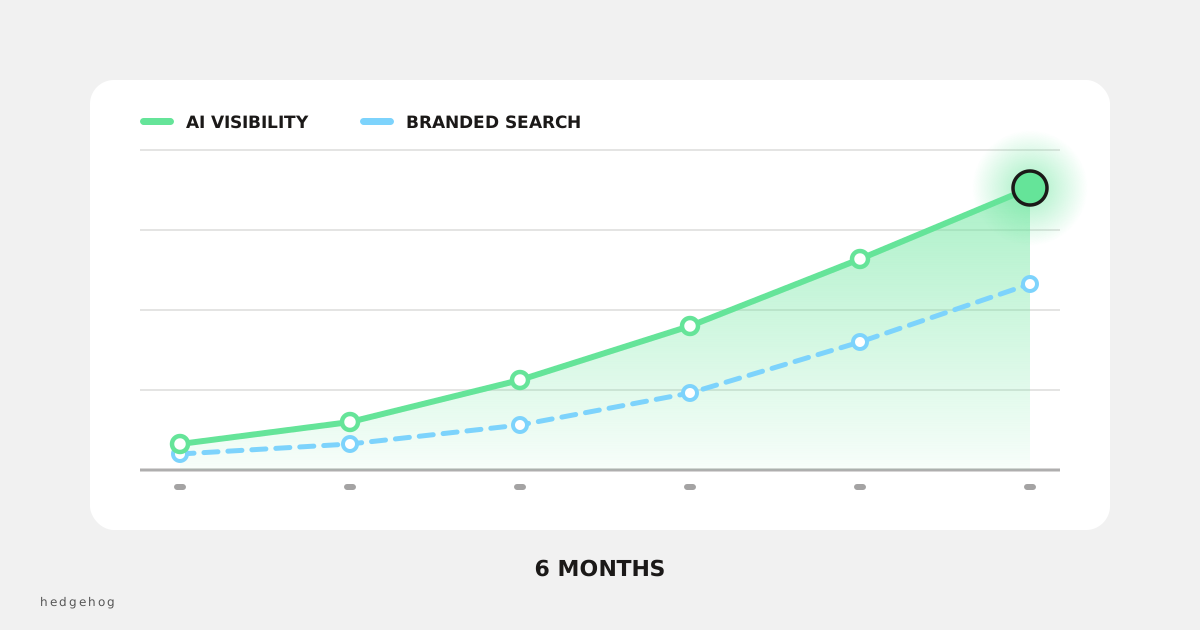
Start with AI search visibility tracking. Pick your top twenty buyer prompts, run them across the major assistants on a set schedule, and record whether you appear and how you’re described. Do it monthly at minimum. You’re looking for a trend line, not a single reading.
Then watch your branded search volume and your direct traffic. When AI search starts working for you, those two lift before anything else does. Someone gets recommended in a chat, doesn’t click, and searches your name three days later. That’s an AI assist showing up as a brand search, and it’s the most common way this work first becomes visible.
Finally, track AI traffic in GA4 by checking referral traffic from chatgpt.com, perplexity.ai and gemini.google.com. The volumes will look small at first. Look at the conversion rate instead, because a visitor who arrives having already been recommended to you is a very different prospect to someone comparing ten options.
#Frequently asked questions
#Is SEO dead?
No. AI assistants are reading web pages, and the pages they read tend to be the ones that rank. Good SEO is now the entry ticket to AI search rather than the finish line. What’s changed is that ranking alone no longer guarantees the click.
#What is AI search optimisation?
It’s optimising for the whole search landscape rather than just Google. That means three things. Structuring content so AI assistants can pull complete answers from it. Earning mentions on the sites those assistants already cite. And turning up on the video and social platforms where people now search directly.
#How long does it take to show up in AI answers?
Faster than traditional SEO in our experience, though it varies. Models refresh what they know from the web on their own schedules. Getting added to a listicle that’s already being cited works quicker than waiting for your own new page to earn authority.
#Do I need to do all four surfaces at once?
No, and you probably shouldn’t. Start with web and AI search, because they share most of the same underlying work. Add video or social once the first two are running properly, and pick whichever one your customers actually use.
#How do I know which prompts to track?
Write down the twenty questions you get asked most often on a sales call. Those are the prompts. Not keywords, questions, phrased the way a real person would say them out loud.
#Where to start
Pick one surface and do it properly rather than doing all four badly. For most Australian small businesses that means web search first, because it’s the foundation the other three lean on, then AI search second.
Then do the one thing almost nobody does. Set up your measurement before you start. In three months you’ll be able to tell the difference between work that paid off and work that just felt productive.
If you want a hand mapping your own four surfaces, that’s exactly the kind of thing we do in a coaching session.
This guide is written by Hedgehog, a DIY digital marketing consultancy specialising in small and medium businesses in Australia. We offer digital marketing consulting, coaching and training.
