Right now, somewhere in Australia, a potential customer is asking ChatGPT which business to use. The AI is giving them three or four names, and the customer is picking one without ever opening Google. If your business isn’t one of those names, you’ve lost a sale you never knew existed.
The good news: getting recommended by AI isn’t a mystery, and it isn’t a paid placement. Platforms like ChatGPT, Claude, Gemini and Perplexity recommend brands they understand clearly and see mentioned consistently across the web. Both of those things are within your control, and understanding the four surfaces your customers search on shows you where to focus. This post walks through how AI decides who makes the list, and the two-part strategy to get your business on it.
#Key summary
- AI platforms are becoming the first place people ask for recommendations, and most of those conversations end without a single click
- AI builds a picture of your brand from patterns: how often you appear, where, and alongside which topics
- There are two wins available: mentions (AI says your name) and citations (AI links your content)
- Getting mentioned starts on your own website: clear structure, consistent naming, answer-first content
- It’s finished off the site: reviews, directories, publications and communities that talk about you
- Small businesses can compete here, because consistency beats size
#Why AI recommendations matter more than clicks
For twenty years, the goal was simple: rank on page one, win the click. AI search breaks that model. When someone asks an AI assistant “who’s the best bookkeeper for tradies in Newcastle”, they get a direct answer with a handful of names. The decision often happens right there, inside the response.
That means visibility is no longer measured only in traffic. A recommendation that never sends a click can still win you a customer, because the AI did the shortlisting for them. If your competitors are on that shortlist and you’re not, you won’t see it in your analytics. You’ll just see fewer enquiries.
This is what’s being called AEO (answer engine optimisation), and it’s the natural next chapter of SEO, not a replacement for it. Everything that made you findable on Google still matters. AI just raises the bar on clarity and reputation.
#How AI decides which brands to recommend
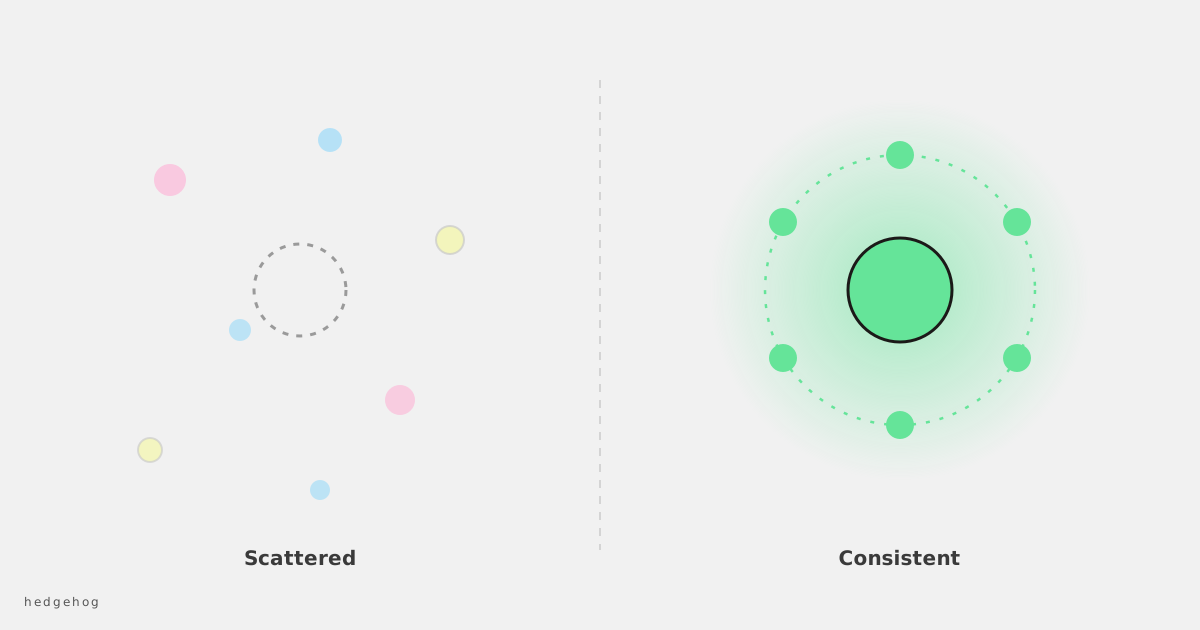
AI doesn’t keep a neat database of businesses with star ratings. It learns by spotting patterns across millions of pages: which names keep appearing next to which topics. A business that’s repeatedly mentioned alongside “emergency plumbing” and “Central Coast” gets confidently placed in that neighbourhood. A business that appears rarely, or in conflicting contexts, stays blurry - and blurry brands don’t get recommended.
Think of it as reputation by repetition. Every consistent mention of your business, in the same category, with the same name, adds weight. Every inconsistency (different business names, vague service descriptions, scattered topics) waters it down.
There’s a second layer too. Modern AI tools also search the live web before answering. So even a newer business with no long history can show up, provided it has a clear, crawlable presence and other sites vouching for it. Established brands get the benefit of both memory and live search. New brands lean almost entirely on what’s findable today, which makes the fundamentals even more important.
#Mentions vs citations: two different wins
It’s worth separating two things that often get lumped together.
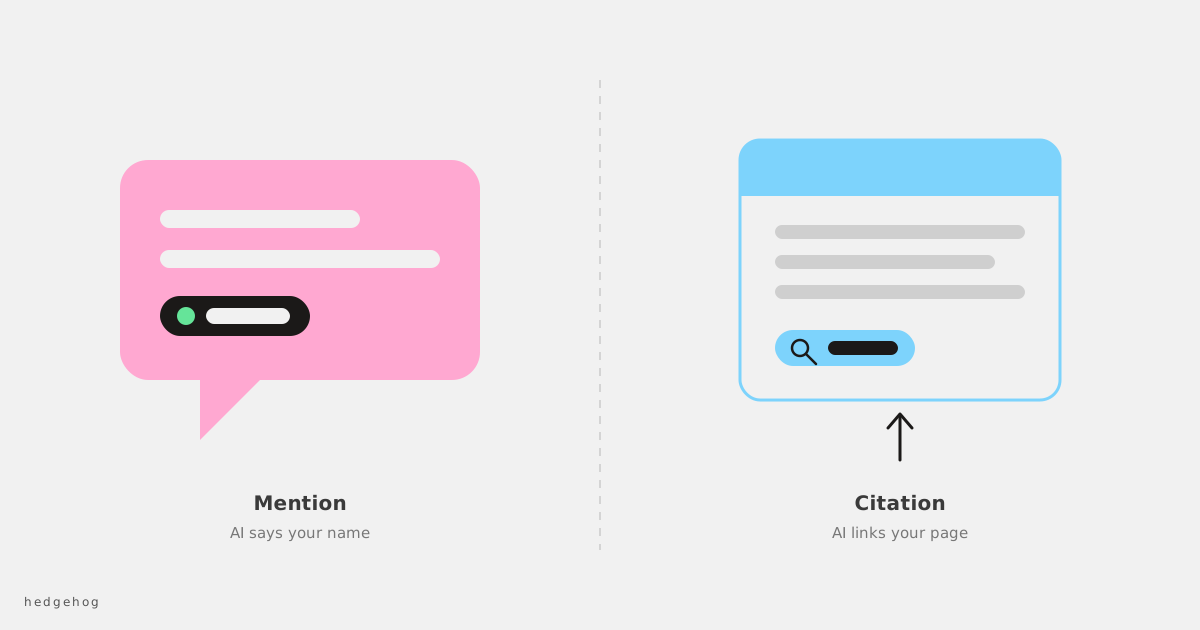
A mention is the AI saying your name: “For that, I’d look at Hedgehog Marketing.” It builds awareness and puts you on the shortlist, even if nobody clicks anything.
A citation is the AI linking to your content as the source for a claim, with your website getting the credit. Citations drive actual traffic, and they tend to reward content with something original in it: your own data, a useful how-to, a clear answer nobody else has written properly.
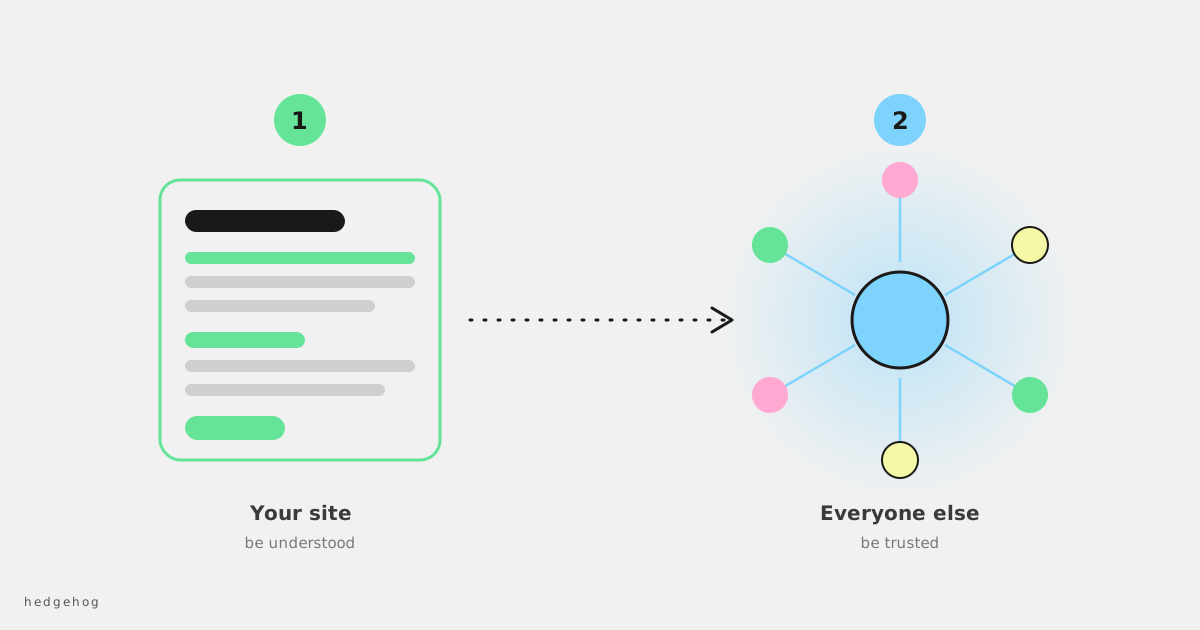
You want both, but they’re earned differently. Mentions come from your overall reputation across the web. Citations come from the quality and structure of individual pages. Which brings us to the two-part strategy.
#Step 1: make your website impossible to misunderstand
Before AI can recommend you, it has to understand you. That’s an on-page job, and most small business websites fail it quietly.
Start with structure. Pick the topic you want to own and build proper coverage around it: a main service page, supporting pages for each sub-service, and content that answers the questions your customers actually ask. When AI breaks a user’s question into smaller sub-questions, a well-structured site shows up across all of them. A scattered site shows up once, maybe.
Then tighten the writing:
- Lead with the answer. Put the conclusion in the first paragraph, not the fifth. AI extracts from the top of pages far more than the bottom.
- Use headings that stand alone. “How much does a website redesign cost in Australia?” is a heading AI can work with. “Our approach” is not.
- Keep your naming consistent. Same business name, same service names, same phrasing on every page, every profile, every directory. Consistency is what turns a fuzzy entity into a confident one.
#Step 2: get other people talking about you
Here’s the uncomfortable part: AI’s picture of your brand is built mostly from what other people say about you, not what you say about yourself.
Every third-party mention - a review site, an industry publication, a local news story, a comparison article, a community thread - teaches AI who you are and what category you belong in. The brands getting recommended consistently have a constellation of these signals all pointing the same way.
Practical ways to build it:
- Reviews, constantly. Google reviews especially, but also any platform your industry trusts. Volume and recency both matter.
- Directories and industry listings. Make sure every listing uses identical business details and describes you the same way.
- Local and industry press. One genuine story in a regional masthead or trade publication is worth more than fifty self-published posts.
- Communities. Being recommended by real people in forums and Facebook groups is exactly the kind of signal AI weighs heavily.
#What this looks like for a small business
You don’t need a national brand to win here. You need to be the clearest, most consistently mentioned option in your category and area. For most of our clients, that boils down to:
- A tidy, complete Google Business Profile with a steady flow of reviews
- One topic owned properly on the website, with answer-first pages and clean headings
- Identical business details everywhere (name, services, suburb, phone)
- A handful of quality third-party mentions: directories, local press, industry sites
Do that for six months and you’ll be ahead of most competitors, because almost nobody is doing this deliberately yet.
#Frequently asked questions
#How do I get mentioned by ChatGPT?
ChatGPT draws on both its training data and live web search. Focus on consistent third-party mentions (reviews, directories, publications) and a clearly structured website. There’s no submission form and no shortcut - your overall web reputation is the input.
#How do I get mentioned by Claude?
The same fundamentals apply. Claude searches the live web for current questions, so a crawlable site with answer-first content and consistent business details gives it what it needs to find and recommend you confidently.
#How do I get mentioned by Gemini?
Gemini leans heavily on Google’s ecosystem, so your Google Business Profile, reviews and standard SEO health matter even more. Keep your profile complete, your reviews flowing and your site structure clean.
#How do I get recommended by Perplexity?
Perplexity is citation-heavy - it links sources for nearly everything. Pages with original, specific, well-structured answers earn citations there. Publish content that says something your competitors haven’t, and structure it so the answer is easy to extract.
#Why doesn’t AI recommend my business?
Usually one of two reasons: AI can’t work out exactly what you do (inconsistent naming, vague pages, scattered topics), or there isn’t enough third-party evidence that you’re a credible option. Fix clarity first, then build mentions.
#The window is open
AI recommendations are being decided right now, by signals most businesses aren’t paying attention to yet. The playbook is refreshingly old-fashioned: be clear about what you do, be consistent everywhere, and give people reasons to talk about you. The businesses that start now will be the default answers in their category before their competitors notice the game changed.
If you’d like help working out where you stand, ask ChatGPT who it would recommend in your category and area. If you’re not on the list, you know where to start.
This guide is written by Hedgehog, a DIY digital marketing consultancy specialising in small and medium businesses in Australia. We offer digital marketing consulting, coaching and training.
