#TL;DR-Why This Makes a Difference
SEO helps your site appear when people search; GEO helps your content become the answer in AI tools. Entities are the building blocks behind both. Without them, your content may get missed by both search engines and AI.
#What Is Generative Engine Optimisation (GEO)?
Generative Engine Optimisation is the practice of making your content more discoverable and usable by AI-driven platforms that generate answers, not just links, which is the core challenge of AI search optimisation.
Think tools like:
- Google SGE (Search Generative Experience), where AI generates a summary of results instead of just listing websites.
- ChatGPT, when connected to browsing, responds with sourced information and links.
- Bing Copilot, which surfaces key content from websites within its AI answers.
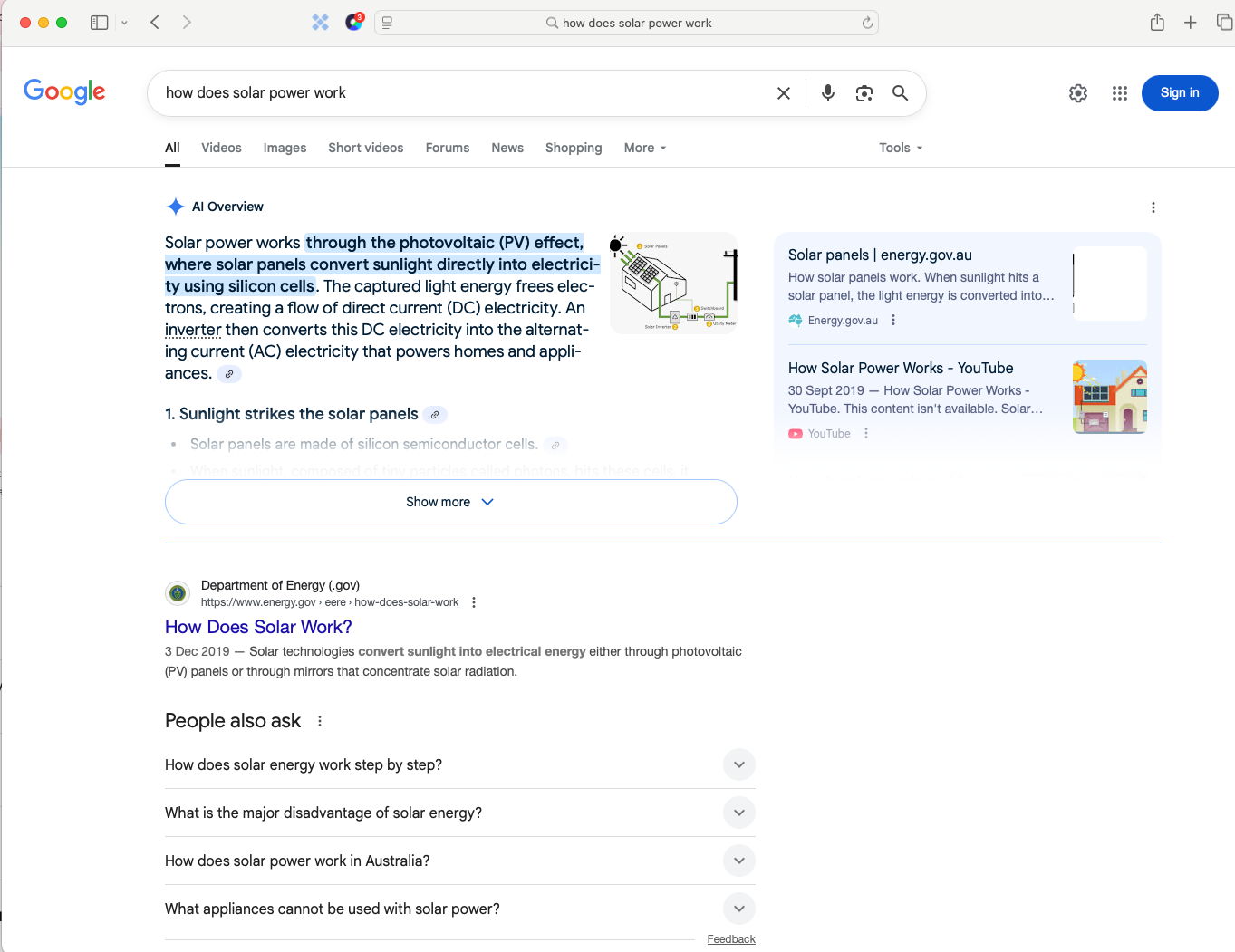
GEO is about helping these platforms find your content, understand it clearly, and feature it in their generative outputs.
#How Is GEO Different from Traditional SEO?
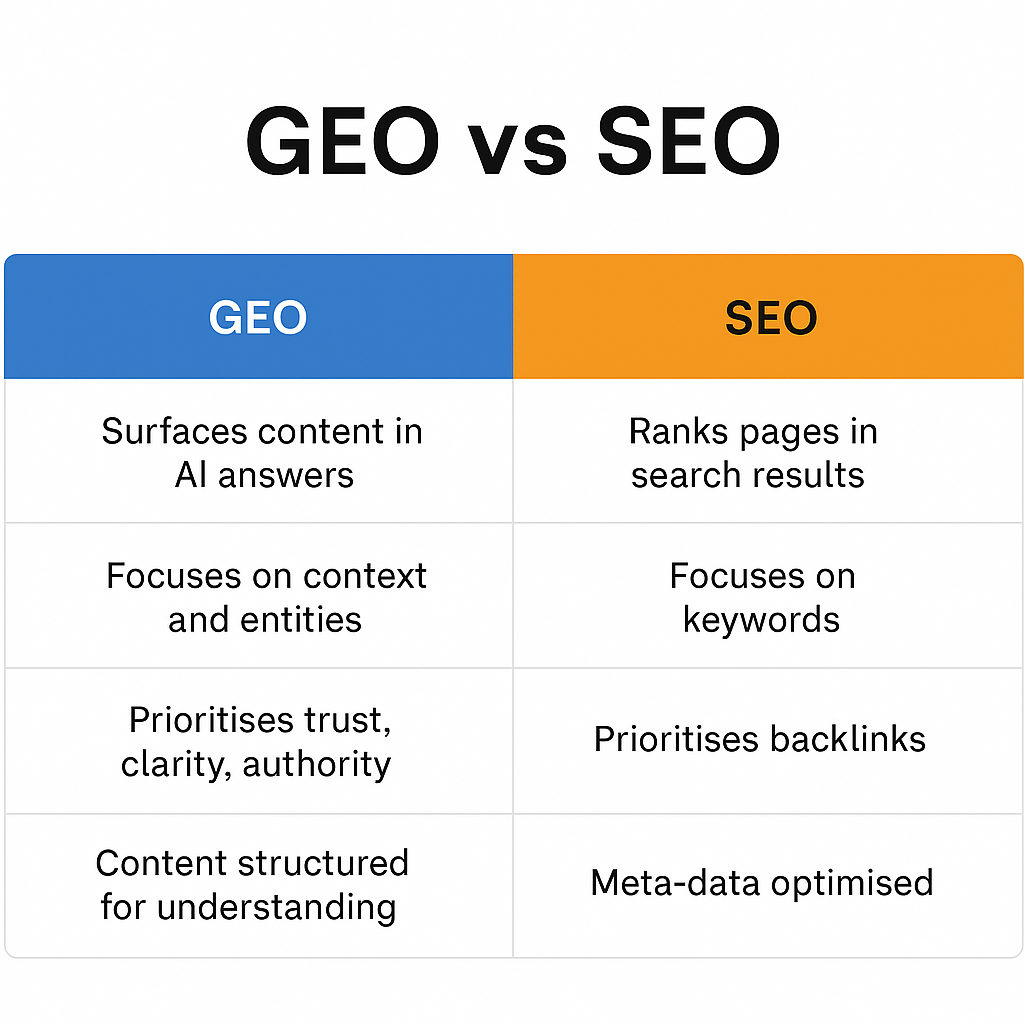
Traditional SEO is built around ranking in search engines by:
- Targeting keywords
- Building backlinks
- Optimising metadata and page structure
GEO, on the other hand, is focused on making your content usable and trustworthy in a world where AI summarises information on your behalf. Here's how they differ:
#So, what exactly do we mean by “entities”?
An entity is a clearly defined concept (such as a person, place, brand, product, or abstract idea) that AI systems and search engines can recognise and understand.
While keywords are simply words people type into search engines, entities are the meaningful things those words refer to. For example, “Paris” can refer to the city or a character in a story, but an entity clarifies which one it is.
In SEO, focusing on entities improves how search engines interpret your content’s context, relevance, and authority.
In GEO, entities become even more critical: AI models use them to trust, interpret, and include your content in generated answers. Using structured data and clear entity references makes it easier for AI to cite your content accurately.
#Why GEO Matters for Small and Medium Businesses
AI-generated content is being placed above traditional results. If your website isn’t GEO-optimised, you may miss out on valuable visibility, even if you rank highly on Google. For more info, read our piece on how SEO is changing.
For businesses, this means:
- More opportunities to be featured in generative answers
- Less dependency on fighting for top spots in SEO (which we predicted from the start!)
- A new way to compete with larger players by being clearer and more helpful
#How to Optimise Your Website for AI Search Engines
Here’s how to make your site GEO-friendly:
#1. Focus on Expertise and Clarity
AI tools are trained to favour content that’s written clearly and backed by authority. Make sure:
- Every blog answers a real user question
- Your “About” page highlights expertise or credentials
- You write like you're explaining something, not just selling
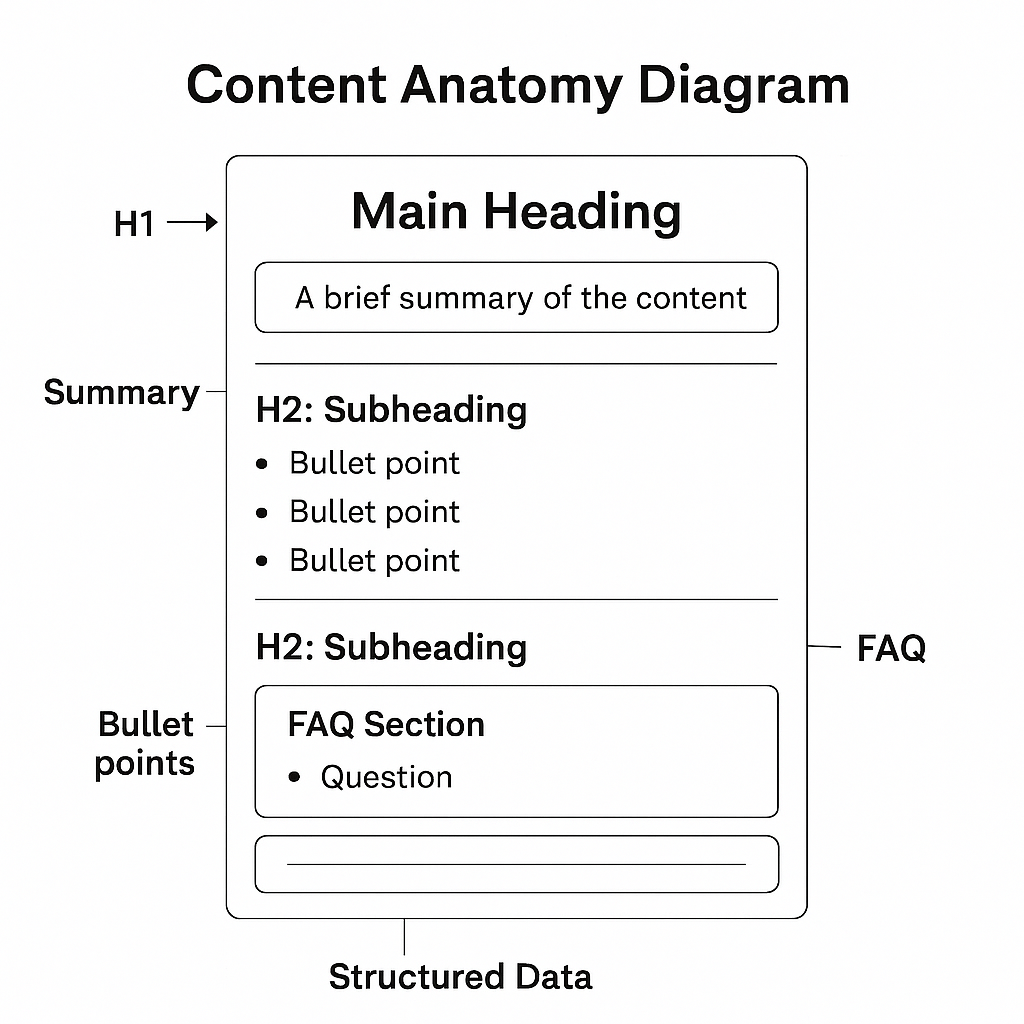
#2. Structure Your Content Clearly
Use:
- Headings (H1, H2, H3) to define topic hierarchy
- Bullet points and summaries to clarify points
- FAQs to answer direct questions
This helps AI models extract meaning from your content more easily.
#3. Optimise for Entities (the Real-World ‘Things’) - Not Just Keywords
GEO is about meaning. Instead of just using the phrase "plumber Sydney", you should also include:
- Related services (blocked drains, gas fitting, hot water repair)
- Contextual location info (Inner West, Eastern Suburbs)
- Mentions of tools or certifications
#4. Use Structured Data
Structured data (Schema.org) helps AI understand the type of content you're sharing, e.g. reviews, FAQs, and local business info. It's especially helpful for:
- Services
- Products
- How-to guides
- Reviews and testimonials
#5. Publish Long-Form, Helpful Content
In-depth content performs better in generative engines. Think:
- Step-by-step guides
- Local area pages
- Case studies with real outcomes
👉 Download our GEO Website Optimisation Checklist to quickly review your site and identify where you can apply GEO strategies today.
#Practical GEO Tips: What You Can Do Today
- Review your most popular pages. Are they structured well for readability?
- Add FAQs that answer real, customer-focused questions
- Use schema markups (FAQ, LocalBusiness, Article)
- Update blog posts to include clearer summaries
- Make sure your business details are consistent across the web
#GEO and SEO Together: A Hybrid Strategy for the Future
GEO isn’t a replacement for SEO; it’s an evolution. Think of it this way:
- SEO gets you found in search
- GEO gets you featured in the answer
By running both side by side, you’ll give your business the best chance at visibility, regardless of how search engines change.
👉 Grab our Hybrid SEO + GEO Strategy Template to map out how both approaches can work side by side in your business.
#Tools and Resources to Support Your GEO Strategy
- Google Search Console: still critical for monitoring performance
- ChatGPT or Claude.ai: test how your site appears in generative tools
- AlsoAsked.com: great for finding natural-language questions
- Schema Markup Generator: to build structured data snippets
- AnswerThePublic: great for FAQ content planning
#FAQs
What is Generative Engine Optimisation?
GEO is the process of structuring your content so that AI tools like Google SGE and ChatGPT can easily find, understand, and feature it in their responses.
Does GEO replace SEO?
No, GEO complements SEO. You still want to rank on Google, but GEO helps you get into AI-generated content that may appear above search results.
Is GEO relevant for local businesses?
Yes, especially so. GEO enables local businesses to be featured in conversational and generative search results that users are increasingly relying on.
Can I do GEO on Wix or Squarespace?
Absolutely. Most platforms support the basics, just focus on excellent content structure, clarity, and use of tools like schema plugins or custom code.
#Conclusion
Generative Engine Optimisation is not just another buzzword; it's the next layer of digital visibility. As AI-powered tools become the norm, GEO is an innovative, forward-thinking strategy to ensure your content doesn’t get buried under the next algorithm update.
You don’t need to overhaul everything. Start with your most valuable pages, focusing on clear and helpful content, and layer in GEO practices to enhance your SEO habits. Your future customers, and the AI that connects them, will thank you for it.
This guide is written by Hedgehog, a ‘Done With You’ digital marketing consultancy specialising in small and medium businesses in Australia. We offer digital marketing strategy, planning, training and implementation.