Everyone’s talking about AI this, video-first that, and personalisation at scale. Most of it is noise designed to sell you software you don’t need. Here’s what we’re actually paying attention to in 2026 - the shifts that matter for businesses doing $500K to $5M in revenue.
#Google’s Getting Worse at Understanding Intent
Search results are becoming a mess. Google’s AI is confident but wrong more often than it should be. For local businesses, this is both a problem and an opportunity.
The problem: your carefully crafted service pages might not rank for the terms you think they should. Google’s interpretation of search intent is getting wonky. The opportunity: competitors are struggling with the same thing. If you get specific about what people actually want when they search, you can win traffic they’re losing.
Stop writing for “digital marketing services” and start writing for “why my Facebook ads aren’t working.” The second one gets found. The first one gets buried under enterprise software vendors.
#Instagram Finally Admitted Reach Is Pay-to-Play
They’ve stopped pretending organic reach will save you. Good. If you want your content seen by your own followers, you need to pay for it. It’s the business model.
What this means for your content strategy: stop making 30 posts a month hoping one goes viral. Make 8 good posts and put $20 behind each of them. Your audience is on Instagram. But Instagram isn’t showing them your posts unless you pay. Accept this reality and budget accordingly.
#Email Deliverability Got Stricter (Again)
Gmail and Apple tightened their spam filters again in late 2025. Newsletters that used to land in inboxes are now hitting promotions tabs or disappearing entirely.
The fix is behavioural. Your open rates matter more than your subject line cleverness. If people consistently ignore your emails, the platforms notice. Your future emails get buried. Send less. Make each one worth opening. Track your engagement rates like your business depends on it - because it does.
#Video Content Hit a Wall
Everyone pivoted to video in 2024. Now we’re drowning in mediocre videos nobody watches to the end. The correction: people want videos that solve problems or entertain them. They don’t want videos of you talking at your phone because TikTok told you to make videos.
Good video content takes time to make. If you don’t have that time, written content that answers specific questions will outperform rushed videos every time.
#First-Party Data Became Non-Negotiable
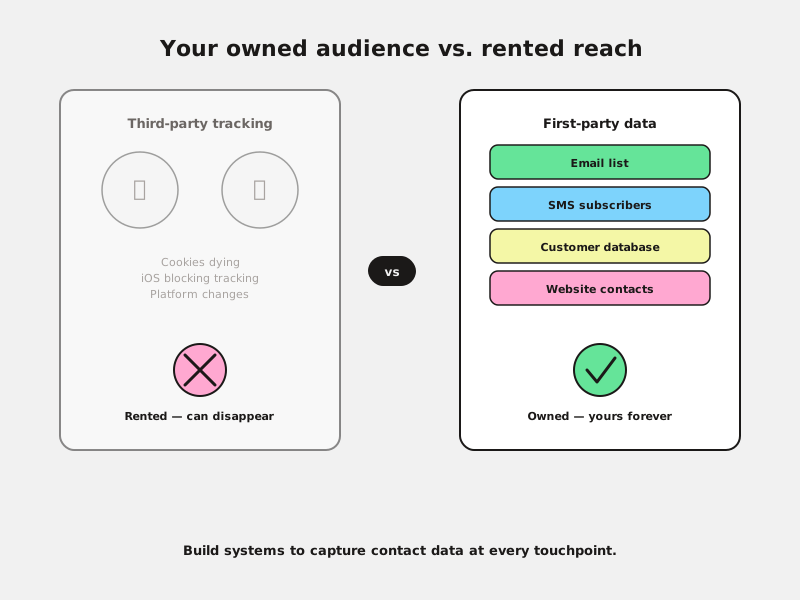
iOS updates. Cookie deprecation. Platform privacy changes. The common thread: third-party tracking is dying. If you don’t own your audience data, you don’t have an audience.
This means your email list, your SMS subscribers, and your customer database are now your most valuable marketing assets. Everything else is rented. Build systems to capture contact information at every touchpoint. Not because it’s trendy. Because it’s survival.
#AI Tools Reached Peak Hype
Every marketing task supposedly has an AI solution now. Most of them create more work than they save. What’s actually useful: AI for repurposing content, basic image editing, and data analysis. Everything else is solving problems you don’t have.
What’s not useful: AI writing that sounds like AI writing. AI-generated videos that look like AI-generated videos. AI strategy that ignores your specific business context. Use AI to handle the boring parts of marketing. Keep humans involved in the parts that matter to your customers.
#Local SEO Got More Competitive
Google Business Profiles matter more than ever. But so does everyone else’s. The gap between businesses that manage their local presence well and those that ignore it is widening. If you’re not actively managing reviews, updating your profile, and posting regularly, you’re falling behind competitors who are.
This isn’t about gaming the system. It’s about showing Google (and customers) that you’re actively running a business worth recommending.
#Attribution Became Impossible
You can’t track customer journeys the way you used to. iOS updates broke Facebook’s tracking. Google Analytics 4 is confusing. Third-party tools are expensive and often wrong. The response: focus on metrics you can actually measure. Revenue. Customer lifetime value. Cost per acquisition at the campaign level.
If a channel brings in customers and the economics work, keep using it. If you can’t prove it’s working, either fix your tracking or stop spending money on it.
#Content That Actually Converts
“Authentic” became a meaningless word. Every brand claims to be authentic while posting stock photos and templated captions. What replaced it: specific content. Content that demonstrates you understand exactly what your customers are dealing with.
Instead of “We’re passionate about helping small businesses succeed,” write “Here’s exactly what to do when your Facebook ad approval gets rejected for no clear reason.” One shows you understand their world. The other could have been written by anyone.
#Platform Consolidation Continued
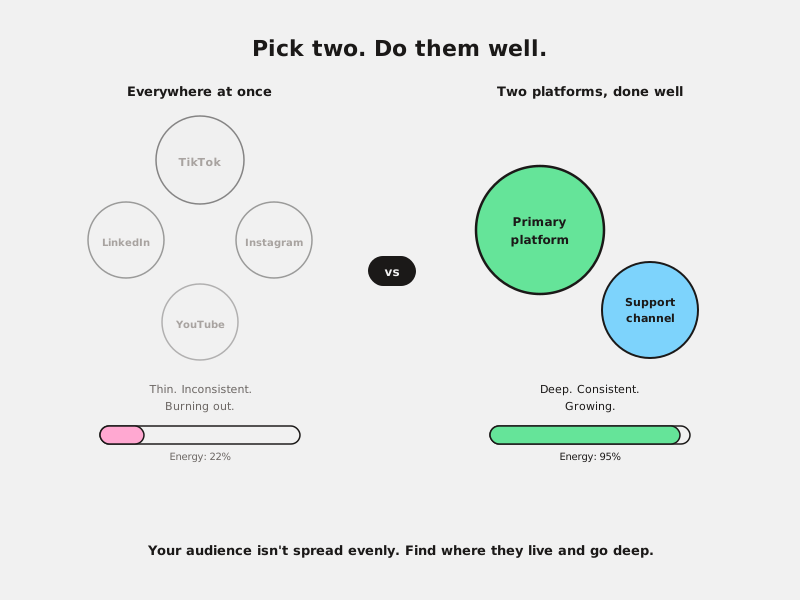
TikTok, Instagram, YouTube, LinkedIn. The temptation to be everywhere is strong. The reality: most small businesses can’t create quality content for four platforms consistently. Pick two. Do them well.
Your audience is concentrated on one or two platforms. Find out where and focus there.
#The Real Trend: Marketing Got Simpler
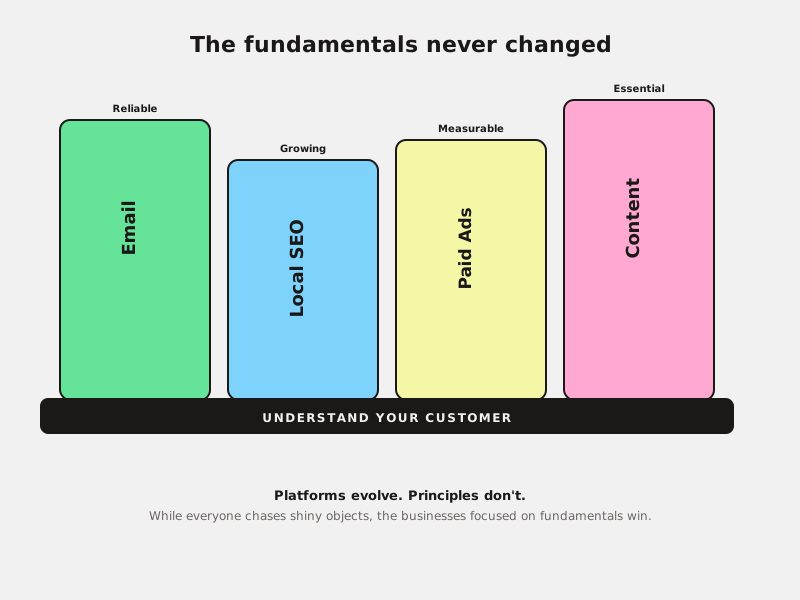
Cutting through the noise revealed what actually works. Email marketing. Local SEO. Paid ads that lead to clear offers. Content that solves specific problems. Not because these tactics are new. Because they’re reliable. While everyone else chases shiny objects, businesses focused on fundamentals are winning.
The platforms and tactics evolve. The principles don’t. Understanding your customers, creating content that helps them, and building systems that turn interest into sales - that’s still the whole game.
Ready to focus on marketing that actually moves the needle? Book a marketing audit. We’ll tell you exactly what’s working, what’s not, and what to do about it first.
