Retargeting is the highest-converting activity in most Meta Ads accounts. The people you're reaching have already expressed some level of interest. They visited your website, watched your video, engaged with your page. Reaching them again with the right message should convert at a higher rate than cold prospecting.
Should. But for most small businesses, retargeting is set up in a way that either barely works or actively wastes money. The problem is the audience windows, the exclusions, and the messaging.
#What you'll learn in this post
- What retargeting is actually doing and why it works when set up correctly
- The three most common retargeting mistakes
- How to structure an audience that actually converts
- What the messaging needs to look like at this stage
- The exclusions you can't skip
#What retargeting is actually doing
When someone visits your website, Meta's Pixel fires and adds that person to a custom audience. You can then run ads specifically to that group of people, showing them a follow-up message knowing they've already been exposed to your brand.
The reason this converts at higher rates than cold advertising: the trust barrier is lower. They already know who you are. They don't need to be introduced to your business. They need a reason to come back and complete the action they didn't complete the first time.
That's the insight that most retargeting campaigns miss. They treat the warm audience like a cold audience, running the same broad brand message to people who've already seen it. The ad needs to be different because the audience is different.
#The three most common retargeting mistakes
1. Audience windows that are too long
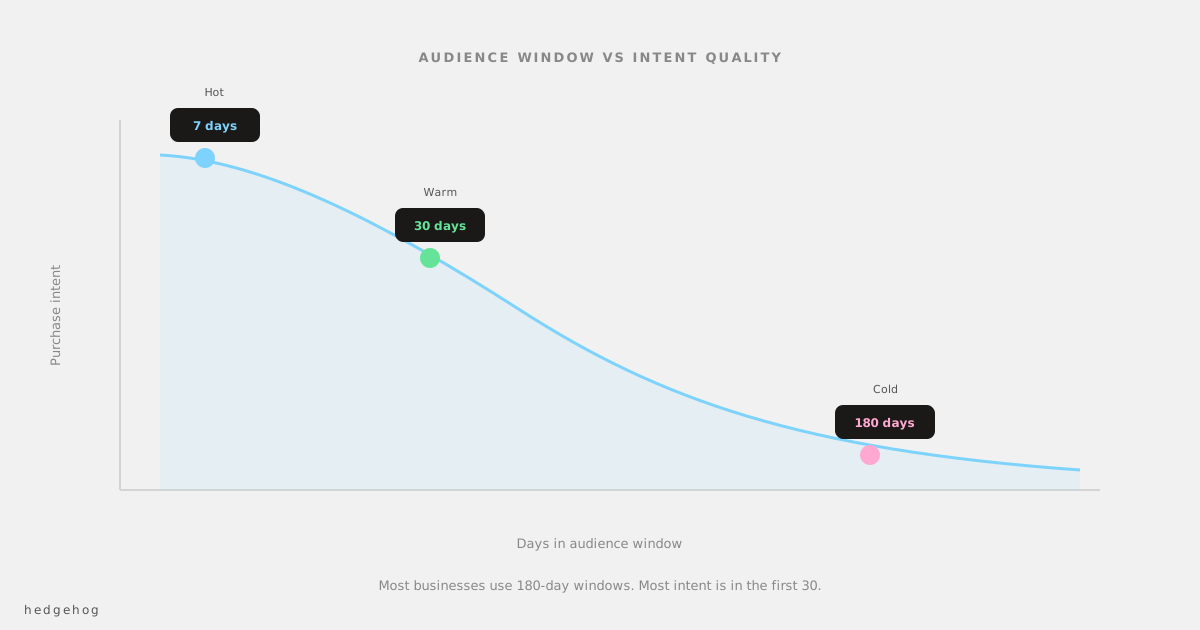
The most common retargeting setup is "website visitors in the last 180 days." That's six months. The person who visited your site in January looking for something specific has a completely different level of intent to the person who visited yesterday. Lumping them together means you're serving follow-up ads to people who stopped being interested months ago.
For most businesses, a 30-day window is more accurate. High-consideration purchases (property, vehicles, high-ticket services) can justify 60-90 days. Consumer goods with short decision cycles should often be even shorter: 7-14 days.
A better structure: separate ad sets for 0-7 days (hottest), 8-30 days (warm), and 31-90 days (cooling). Different messages, different bids, different creative. The urgency and offer in the ad should match where the person is in their consideration process.
2. No page-level segmentation
Not all website visitors are equal. Someone who visited your pricing page is much closer to a decision than someone who read a blog post. Someone who added to cart but didn't purchase is hotter than someone who browsed a category.
Most small business retargeting targets "all website visitors" uniformly. This dilutes budget across people with very different levels of intent and serves the same generic message to everyone.
At minimum, separate your retargeting into:
- Pricing/contact page visitors (highest intent: deserves direct, specific follow-up)
- Product/service page visitors (medium intent: deserves benefit-focused reminder)
- Blog/general content visitors (lower intent: deserves brand-building, soft CTA)
3. Missing exclusions
The most expensive retargeting mistake: showing acquisition ads to people who already bought from you.
If someone purchased last week and you're running a "first order" discount ad to your website visitors, you're paying to offer a discount to a customer who doesn't need one. Worse, if they see the discount and realise they paid full price, you've created an unhappy customer with your ad spend.
Exclude your existing customers from retargeting campaigns. Upload your customer list as a custom audience and exclude it at the ad set level. Do this before running anything.
#How to structure an audience that actually converts
A well-built retargeting structure for an e-commerce or service business:
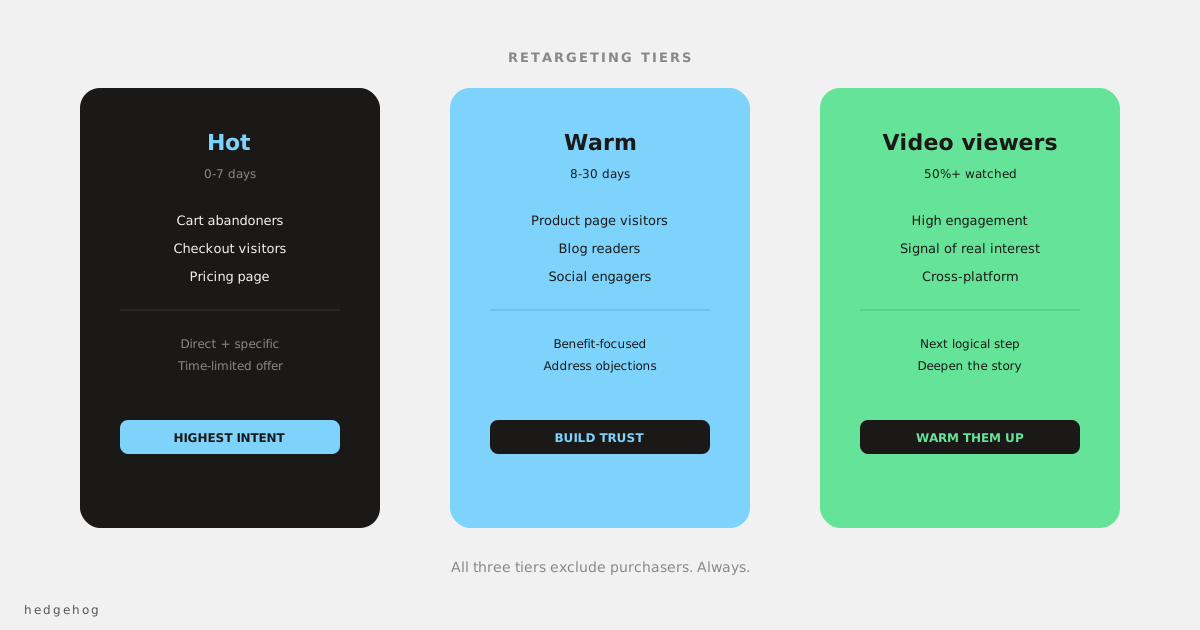
Hot retargeting (0-7 days) Audience: Add-to-cart / abandoned checkout / pricing page visitors Message: Direct and specific. "You left something behind" / "Ready when you are" / specific product they viewed. Consider a time-limited offer if margins allow. Exclusions: Purchasers
Warm retargeting (8-30 days) Audience: Product page visitors, blog readers, social engagers Message: Benefit-focused. Address the most common objection. Testimonials. Trust signals. Exclusions: Purchasers, 0-7 day visitors (they're in their own campaign)
Video viewer retargeting Audience: People who watched 50%+ of your video ads Message: This person showed real engagement. Follow up with the next logical step: a deeper product story, a specific offer, or social proof. Exclusions: Purchasers
#What the messaging needs to look like
The critical shift: retargeting copy acknowledges that the person already knows you.
Cold ads introduce. Retargeting reminds.
What this means in practice:
- Don't re-explain what your business does
- Do address the specific reason they might not have converted yet (price, uncertainty, timing)
- Do use social proof (reviews, case studies, results) because this audience is in the consideration stage
- Do be more direct about what you want them to do
The ad that works for cold prospecting ("Here's why we're different from other [category] businesses") doesn't work for retargeting. The ad that works for retargeting ("Still thinking about it? Here's what other customers said about making the decision") doesn't work cold.
Match the message to the awareness level.
#The exclusions you can't skip
In order of importance:
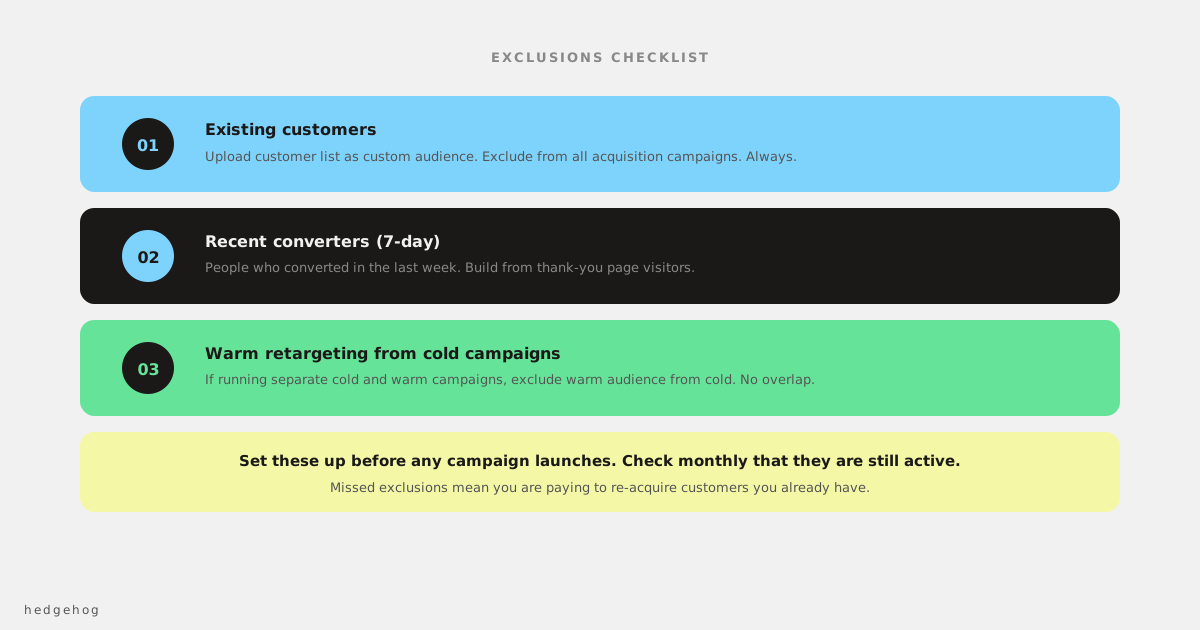
Purchasers / existing customers: always. Upload your customer list and exclude it from acquisition retargeting. Create a separate campaign for cross-sell and upsell if those are relevant to your business.
Recent converters: if someone converted in the last 7 days, they don't need to see acquisition ads. Build a 7-day post-purchase exclusion audience (people who visited your thank-you or confirmation page).
Your warm retargeting audience from your cold prospecting campaigns, if you're running separate cold and warm campaigns, exclude your warm retargeting audience from cold prospecting. Otherwise the same person is in two campaigns simultaneously and you're competing with yourself.
#Frequently Asked Questions
How much budget should I allocate to retargeting vs prospecting? A typical split for a growing business: 70% prospecting, 30% retargeting. Retargeting audiences are smaller and more efficient, so they don't need proportionate budget. They need adequate budget to maintain frequency without fatiguing. For smaller accounts where retargeting audience size is limited, less than 20% may be appropriate.
What if my retargeting audience is too small to run? Meta requires a minimum audience size of around 1,000 people for reliable ad delivery. If your retargeting audiences are smaller than that, broaden the window (try 60 or 90 days) or combine page categories. Also check that your Pixel is installed correctly. Many small businesses have retargeting audiences that are small because the Pixel isn't firing on all relevant pages.
Should I use dynamic product ads for retargeting? If you're in e-commerce, yes. Dynamic product ads (showing the specific product someone viewed) consistently outperform static retargeting ads for cart abandonment and browse abandonment use cases. Requires your product catalogue to be connected to your Meta Business Suite.
How do I know if my retargeting is working? Compare cost per result between your warm retargeting ad sets and your cold prospecting ad sets. Retargeting should be significantly more efficient. If it isn't, the audience windows are too long, the messaging isn't differentiated, or the exclusions aren't set correctly.
#Fix the setup, not the budget
The answer to poor retargeting performance is almost never more budget. It's tighter audience windows, page-level segmentation, correct exclusions, and messaging that acknowledges where the person is in their decision process.
Get those four things right and retargeting becomes the most efficient part of your Meta account, because you're reaching people who already know you, with a message that speaks to where they actually are.