You’ve probably seen the Obsidian tutorials. A local folder of markdown files. A Claude system prompt that reads them at the start of each session. Your notes become context. Your context becomes memory. It’s clever, and for most people, it’s useful.
But it’s also the beginning of the road, not the destination. The “AI second brain” model solves one problem: making sure Claude knows who you are and what you care about. What it doesn’t solve is what happens when you want your AI to do something, not just remember something.
#Key summary
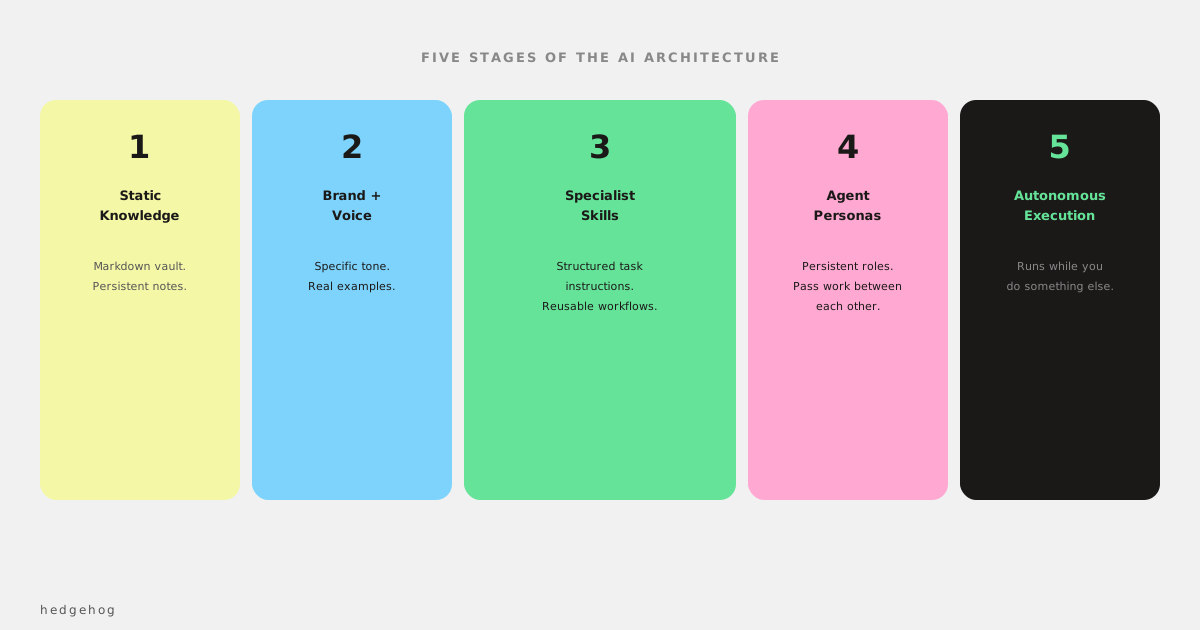
- The Obsidian/markdown vault approach (Stage 1) is real progress, but it’s passive knowledge, not active capability
- Stage 2 adds brand and voice specificity: real examples, not adjectives, so the output gap closes fast
- Stage 3 builds reusable skills: structured instructions for recurring tasks that encode how you work, not just what to do
- Stage 4 moves from skills to agent personas: defined roles that can pass work between each other like a team
- Stage 5 is autonomous execution: work that happens without you initiating it every time
#Stage 1: The Static Knowledge Base (Where Most People Stop)
The markdown vault approach works because it gives Claude continuity. Instead of re-explaining your business every session, you front-load that context once. Claude reads your notes, understands your goals, and the conversation starts from a better place.
This is real progress. Don’t dismiss it.
The limitation is that knowledge bases are passive. They tell Claude about your world, but they don’t give it the structure to operate in your world. It’s the difference between a new employee who’s read the company handbook and one who’s spent six months learning the actual job.
#Stage 2: Brand and Voice Awareness
The next layer is specificity. Not just “here’s what I do” but “here’s exactly how I write, what I never say, and what our clients actually care about.”
This is where most businesses leave a lot on the table. Generic AI output sounds generic because the model is working with generic inputs. Feed it your real tone of voice (actual examples of copy you love, phrases you hate, the level of formality you hold with clients) and the output quality changes fast.
A properly trained brand layer means you stop editing AI output into shape and start refining it. Smaller gap. Less work. Better results.
#Stage 3: Specialist Skills
Here’s where the architecture gets interesting. Once you have solid brand context, you can build skills: structured instructions for specific recurring tasks. A planning report skill. A blog writing skill. A Google Ads audit skill. An email sequence skill.
Each skill encodes not just what to do, but how to do it your way. Your preferred structure. Your benchmarks. Your reporting format. The skill becomes a reusable instruction set that any session can call on without you re-explaining it.
This is the shift from “AI as a chat tool” to “AI as a workflow layer.” You’re not prompting from scratch anymore: you’re invoking a process.
#Stage 4: Specialist Agent Personas
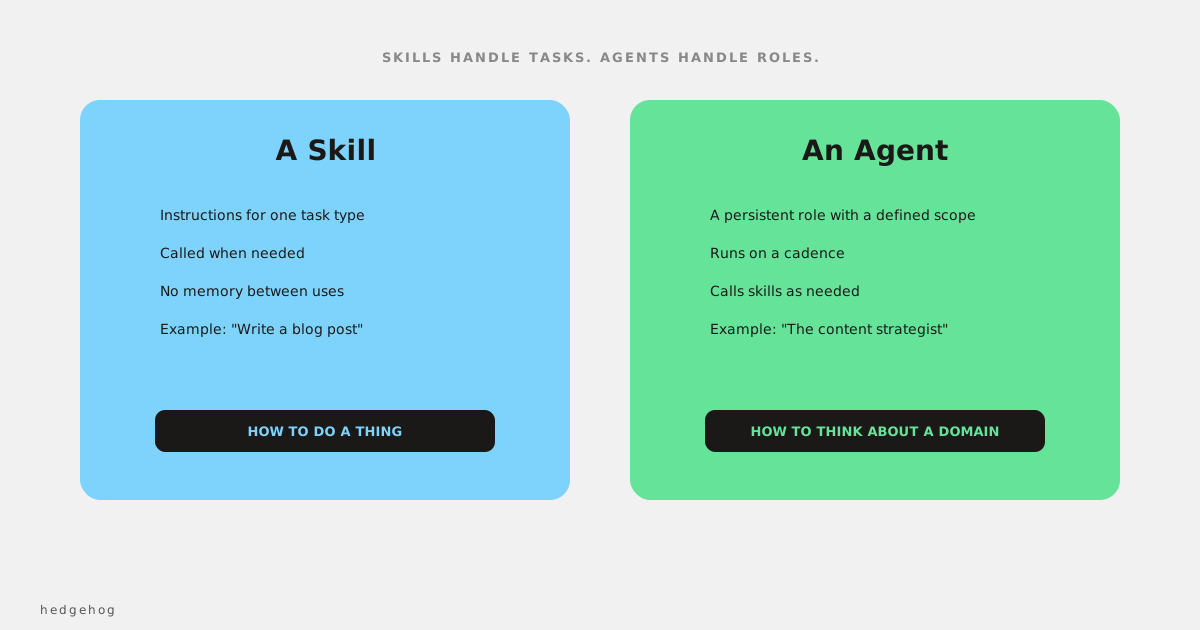
Skills handle tasks. Agents handle roles.
When you give an AI a persistent persona (a strategist who thinks in terms of channel mix and client objectives, a copywriter who cross-checks everything against brand guidelines, a data analyst who flags anomalies before they become problems), you’re no longer managing one general-purpose tool. You’re running a team.
Each agent has a defined scope, a defined voice, and a defined standard. They can pass work to each other. The strategist briefs the copywriter. The copywriter passes to brand QA. Brand QA raises flags before anything hits the client. The workflow runs like a small agency because it’s structured like one.
#Stage 5: Autonomous Execution
The final stage is when the system stops waiting to be asked.
Scheduled reports that pull live data and write themselves. Client deliverables that move through a review pipeline automatically. Alerts that fire when a campaign metric drops below threshold. Work that gets done while you’re doing something else.
This isn’t science fiction. It’s the architecture we’ve built at Hedgehog: a multi-agent system called Hilda that runs on persistent memory, structured skills, and specialist personas, and executes real deliverables across our client base.
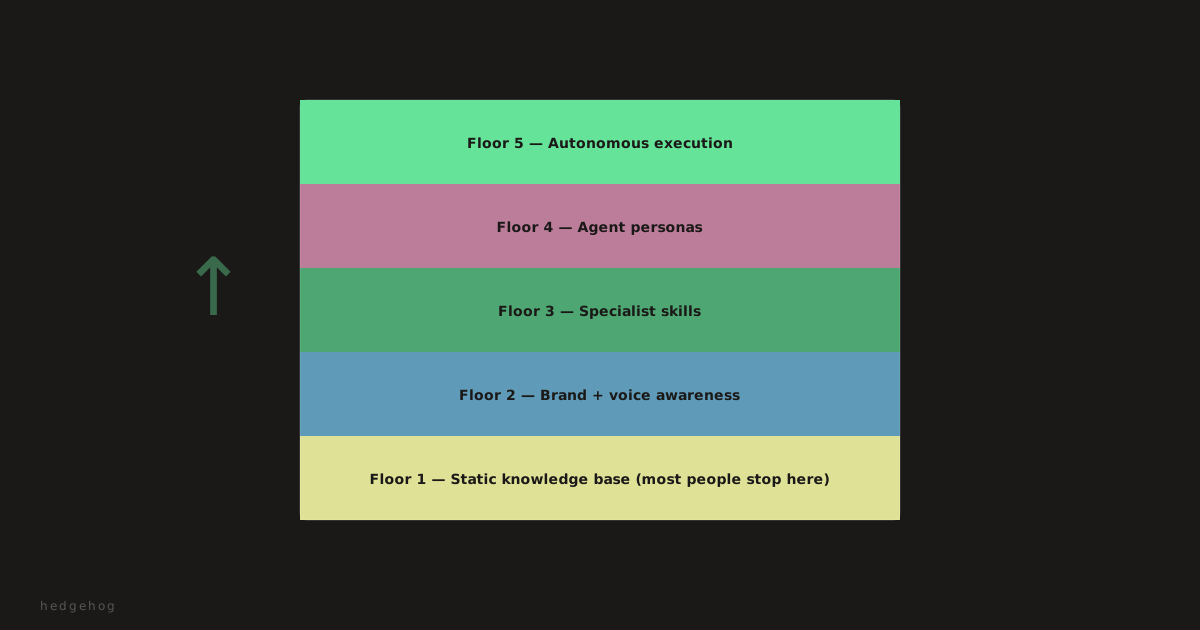
The Obsidian second brain tutorials aren’t wrong. They’re just pointing at the first floor of a much taller building.
#Frequently Asked Questions
#Do I need to be technical to build past the basic second brain stage?
Less than you’d think. The skill and agent layers are mostly structured writing: clear instructions, worked examples, defined outputs. You don’t need to code to build them. You need to think clearly about how you work and what “good” looks like for each task.
#How much time does it actually take?
The honest answer: weeks of iteration, not an afternoon. Getting the knowledge base right is fast. Training brand voice takes a few sessions. Building skills takes time because you need to test them against real tasks and refine what doesn’t work. It compounds though: once the infrastructure exists, it keeps returning value.
#Can this work for a one-person business or is it overkill?
It’s particularly valuable for small teams and sole operators, because the leverage is higher. A solo marketer running an AI system with five specialist skills gets a lot more done per hour than one relying on blank-slate chat sessions.
#What’s the difference between this and just using a good system prompt?
A system prompt is context. A skill is a process. An agent is a role. They’re related but not the same. A good system prompt tells Claude who you are. A skill tells it how to do a specific task. An agent tells it how to think about a whole domain of work. You need all three layers for a system that actually compounds.
#This Is Where the Tutorials Stop, and the Work Starts
The second brain concept is having its moment, and that’s fair, because it represents a genuine improvement over starting every AI session cold. But the people building that model as a final destination are going to hit a ceiling.
The ceiling is execution.
If you’re curious what the next level looks like in practice (the skills, the agents, the workflows), we’re happy to show you. It’s architecture.