This is the model we use with every client to work out where the gaps are. It splits search into four surfaces: web search, AI search, video search and social search. Each one has its own mechanics, its own winners, and its own set of plays. Ranking well on one gives you almost nothing on the other three. Here’s the whole framework, including the specific tactics we run, so you can audit your own business against it.
#Key summary
- Search now happens across four distinct surfaces: web, AI, video and social.
- Traditional SEO covers one of the four, and it’s the one with the most competition.
- AI search optimisation is a different discipline to SEO, not a rebrand of it.
- Each surface has specific, repeatable plays rather than vague best practice.
- Most businesses should fix one surface properly before spreading across all four.
- The right starting surface depends on whether you’re local service, ecommerce or a considered purchase.
#Why “SEO is dead” is the wrong way to say it
SEO isn’t dead. It got smaller relative to everything around it.
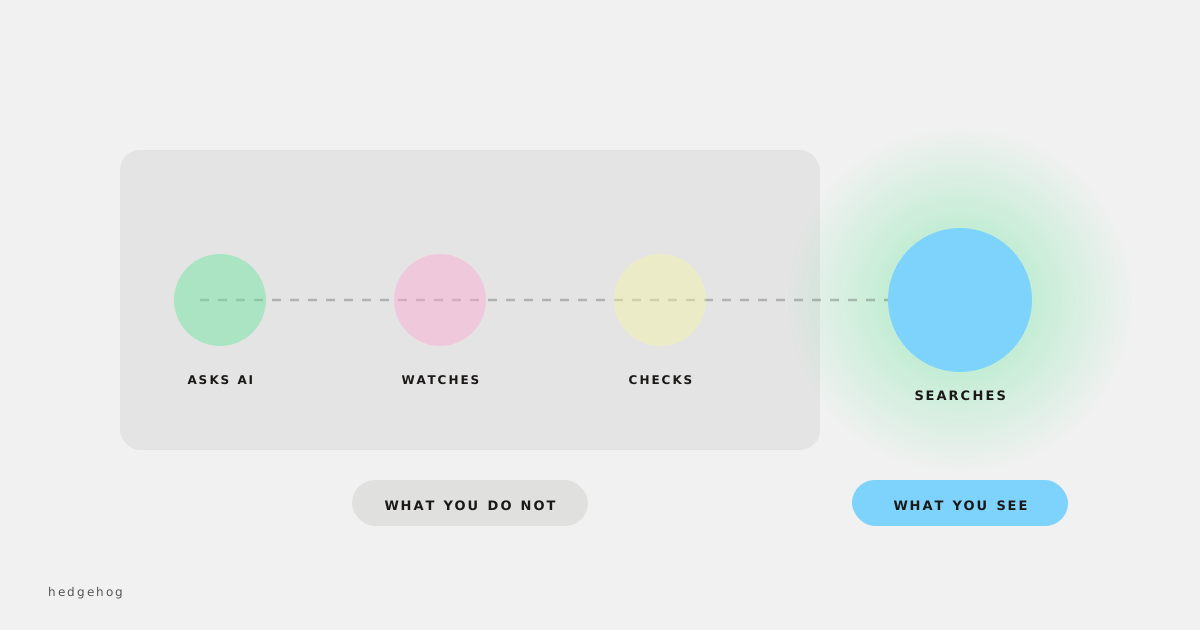
Ten years ago, “how do I get found” and “how do I rank on Google” were close enough to the same question that nobody needed to separate them. That’s no longer true. A customer researching a purchase might ask ChatGPT for options, watch a YouTube comparison, check Reddit for whether a brand is any good, and only then run a Google search for the business name they’ve already decided on.
Every one of those steps is a search. Only the last one shows up in your rankings report, and by the time it happens the decision is mostly made.
The businesses winning right now are the ones showing up in more than one place along that path.
#Surface one: web search
This is Google and Bing, and it’s the surface you already know. It’s also the most competitive, which is why the plays that work are the unglamorous ones.
Pick five money pages. Not fifty. Five pages that actually make you money, usually your core service or category pages. Everything else supports these.
Write eight to twelve supporting posts around each, and link them back. This is the part people skip. A money page with a dozen useful posts pointing at it beats a money page sitting on its own, every time. The posts answer the questions somebody asks before they’re ready to buy.
Add trust signals. Author bios with real credentials. Reviews on the page rather than buried on a testimonials tab. Last-updated dates that are actually accurate. These matter more than they used to, because they’re also what AI systems read when deciding whether to cite you.
Fix your mobile experience. Not “make it responsive”. Actually load it on a phone on a normal connection and try to buy something or book something. Most Australian small business sites fail this test in a way the owner has never seen, because the owner always checks on desktop.
#Surface two: AI search
This is ChatGPT, Gemini, Perplexity, Claude and Copilot. It’s the surface with the most opportunity right now, because the competition hasn’t caught up and the tactics are different from SEO.
The core insight is that AI systems don’t rank pages, they assemble answers. So the goal is to be the source that gets pulled into the answer.
Ask the AI what it checks. Take a real buyer prompt for your business: something like “best mobile mechanic in Newcastle” or “should I use a bookkeeper or an accountant”. Then ask ChatGPT directly which sub-questions it works through before answering that. You’ll typically get five to ten questions, covering things like price range, credentials, service area, what’s included, and common problems.
Answer all of them on one page, each under its own H2. This is the single most useful tactic on this list. Most businesses have those answers scattered across six pages or nowhere at all. Putting them on one page, clearly structured, makes that page enormously easier for an AI system to use.
Export every domain cited across your top 30 buyer prompts. Run the prompts your customers would actually type. Record every site the AI cites. You’ll see the same twenty or so domains repeatedly, and they’re usually not your competitors’ websites. They’re directories, listicles, comparison sites and industry publications.
Pitch the listicles that include your competitors but not you. From that export, find the pages that already list businesses like yours and don’t mention you. Contact them. This is old-fashioned outreach, and it works disproportionately well because those pages are feeding the AI answers your customers see.
Track your visibility over time. Run the same prompts monthly and record whether you appear. It’s rough, it’s manual, and it’s still better than the alternative, which is having no idea.
#Surface three: video search
YouTube is the second largest search engine in the world and most small businesses treat it as a place to park a promo video nobody watches.
Reuse one long-form piece across platforms. Film one substantial thing properly, then cut it. A twenty-minute explainer becomes the YouTube piece, six shorts, three LinkedIn clips and a podcast segment. Businesses fail at video because they try to originate content per platform, which is unsustainable, rather than adapting one asset.
Adapt formats that already work. Don’t invent a format. Find the video structures already performing in your category and use them with your content. The format is proven; your expertise is the differentiator.
Improve your visuals and on-screen text. Most business video fails on production basics rather than content. Readable text, decent audio, and something visually happening in the first three seconds will outperform better advice presented badly.
#Surface four: social search
Reddit, LinkedIn, X, Instagram and Facebook. People search inside these platforms constantly, and increasingly they trust what they find there more than what they find on Google, precisely because it looks less optimised.
Engage in communities properly. Reddit especially. Find the subreddits where your customers ask questions and answer them as a knowledgeable person, not as a brand. This is slow and it does not scale, which is exactly why it works and why your competitors won’t do it.
Make platform-specific content instead of cross-posting. The same post pushed to five platforms performs badly on all five. If you’re going to be on a platform, be on it properly or don’t bother.
Reuse formats that already went viral in that community. Every community has post shapes that reliably work. Study them, then use them for your own material.
#Where to start
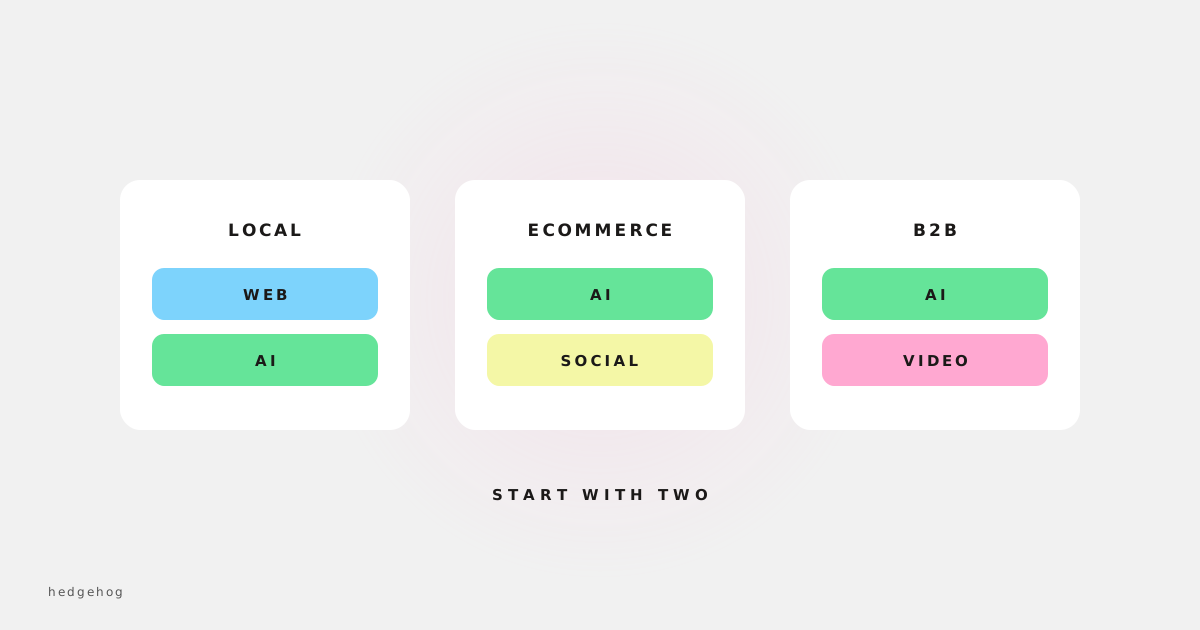
You can’t do all four at once and shouldn’t try. Pick based on what you sell.
Local service businesses should start with web search, because local intent still resolves through Google and Maps more than anywhere else. AI search second, because “best plumber in Geelong” style prompts are growing fast and the local competition for them is close to zero.
Ecommerce should start with AI search and social search. Product research has moved decisively into AI assistants and community recommendations, and traditional product page SEO is brutally competitive against marketplaces you can’t outrank.
Considered purchases and B2B should start with AI search and video. Long research cycles mean buyers ask a lot of questions before they contact anybody, and being the source that answers those questions is worth more than ranking for a term they search once at the end.
#What 90 days looks like
Month one: audit and fix. Run your top 30 buyer prompts through the AI tools and record where you appear and who gets cited instead. Pick your five money pages. Get your trust signals in place.
Month two: build. Write the one-page answer to all the sub-questions for your highest value service. Start the supporting content around your money pages. Begin the outreach to the listicles that don’t include you.
Month three: extend. Add the second surface for your business type. Re-run your prompt tracking and compare against month one.
That’s a realistic pace for a business doing this alongside its actual job. It’s slower than an agency pitch and considerably more likely to happen.
#Frequently asked questions
#Is AI search optimisation the same as SEO?
No. They overlap, because both reward clear, credible, well-structured content. But SEO optimises for ranking a page and AI search optimisation optimises for being cited in an answer. The tactics diverge quickly, particularly around structuring answers to sub-questions and getting mentioned on third-party sites.
#What is GEO or answer engine optimisation?
GEO, or generative engine optimisation, is the term some people use for what we’re calling AI search. Answer engine optimisation means roughly the same thing. The labels are still settling. The work underneath them is what matters, and it’s the surface two plays above.
#How do I get my business recommended by ChatGPT?
Mostly by being cited on the sources it draws from, which are often directories, listicles and comparison articles rather than your own website. Answer the sub-questions thoroughly on your own site, then work on getting included in the third-party pages that already rank for your category.
#Do I need to be on all four surfaces?
No, and trying usually produces four mediocre efforts. Two done properly beats four done badly. Use the starting-point guide above and add a surface only once the previous one is working.
#How long before any of this shows results?
Web search remains slow: expect six months for meaningful movement on competitive terms. AI search can move faster, sometimes within weeks, because you’re influencing what gets assembled rather than climbing a ranking. Social and video depend almost entirely on consistency.
#Where this leaves you
The uncomfortable part of this framework is that it makes visible how much of the customer journey you can’t see. Your rankings report describes one surface out of four, and it’s the surface customers increasingly arrive at last.
The encouraging part is that almost nobody in the Australian market is working all four properly yet. The gap is wide open, and the plays above are specific enough to start on this week.
Pick your surface. Run your 30 prompts. See who’s getting cited instead of you. That single exercise tends to change how people think about search faster than anything else we do.
If you’d like to work through the framework inside your own business, that’s exactly what our consulting is for. We also run it as a hands-on workshop through our training program.
This guide is written by Hedgehog, a DIY digital marketing consultancy specialising in small and medium businesses in Australia. We offer digital marketing consulting, coaching and training.
