If you're running an online store and still using Mailchimp for your email marketing, this post isn't going to be gentle. Klaviyo exists, it's built specifically for e-commerce, and the gap between what it does and what a generic email tool does is enormous.
That doesn't mean Klaviyo is right for every business. But if you're selling products online and you're not on it, you're almost certainly leaving money on the table.
#What you'll learn in this post
- What makes Klaviyo different from standard email platforms
- Which Klaviyo features actually move revenue for e-commerce stores
- Who Klaviyo is (and isn't) the right fit for
- How to know if you're ready to make the switch
- What to expect from setup and onboarding
#What makes Klaviyo different
Most email platforms were built for newsletters. You write an email, you send it to a list, you check how many people opened it. That's the core loop - and for a service business or content creator, it's often enough.
E-commerce is different. Your customers are leaving things in carts. They're browsing products and not buying. They're making their first purchase and then going quiet. They're buying three times a year and you want to get them to four. None of that maps neatly onto "send a newsletter."
Klaviyo was built around behavioural data from day one. It connects directly to your Shopify, WooCommerce, or BigCommerce store and pulls in real-time purchase history, browsing behaviour, cart activity, and product data. That integration is deep - not just "here's a list of people who bought something." It's "this specific customer browsed your running shoes twice this week, added a pair to their cart on Tuesday, and hasn't ordered in 63 days."
That data becomes the trigger for everything.
#The flows that drive the most revenue
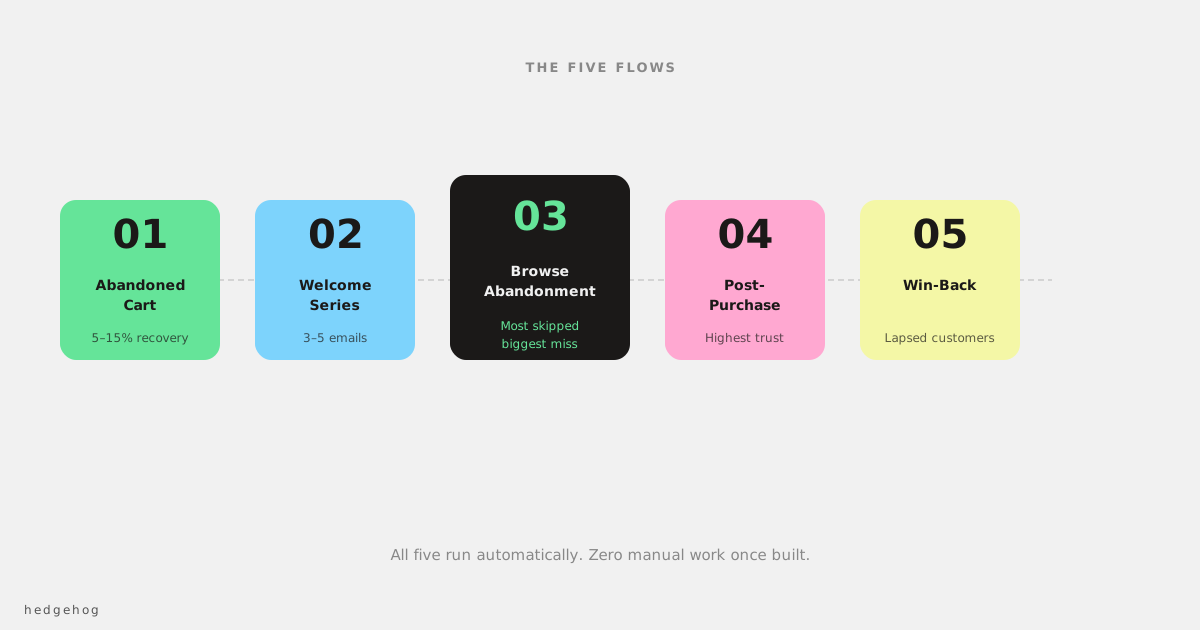
The word "automation" gets thrown around a lot, but Klaviyo's flows are where the real commercial value lives. These are emails that send automatically based on what a customer does (or doesn't do).
Abandoned cart is the obvious one. Someone adds to cart and doesn't check out - Klaviyo fires a sequence of emails. The first is a reminder. The second might offer social proof. The third might include a small incentive. Done well, abandoned cart flows typically recover 5–15% of abandoned carts, which for a store doing decent volume adds up quickly.
Welcome series sets the tone for every new subscriber. It's your chance to introduce the brand, build trust, and convert someone who gave you their email but hasn't bought yet. A well-written three to five email welcome sequence consistently outperforms a single "thanks for subscribing" email.
Browse abandonment is the one most stores skip, and it's a mistake. Someone looked at your product, didn't add it to cart, and left. That's a warm lead. A single well-timed email asking "still thinking about it?" catches people at the right moment without the urgency of a cart recovery sequence.
Post-purchase flows are where a lot of stores leave money on the table. The window right after someone buys is the highest-trust moment in your relationship. A good post-purchase sequence thanks them, sets expectations on delivery, asks for a review at the right time, and introduces them to complementary products. It's retention work, and retention is cheaper than acquisition.
Win-back targets customers who haven't purchased in a while. The definition of "a while" depends on your purchase cycle - for a supplement brand it might be 60 days; for a furniture store it might be 18 months. Klaviyo makes it easy to define those windows and send targeted sequences to bring lapsed customers back.
#Segmentation that actually works
Generic email platforms let you segment by basic list membership or tags. Klaviyo lets you segment by almost anything: purchase frequency, average order value, the last product category someone bought from, how many times they've opened your emails in the last 90 days, whether they've ever clicked a specific type of content.
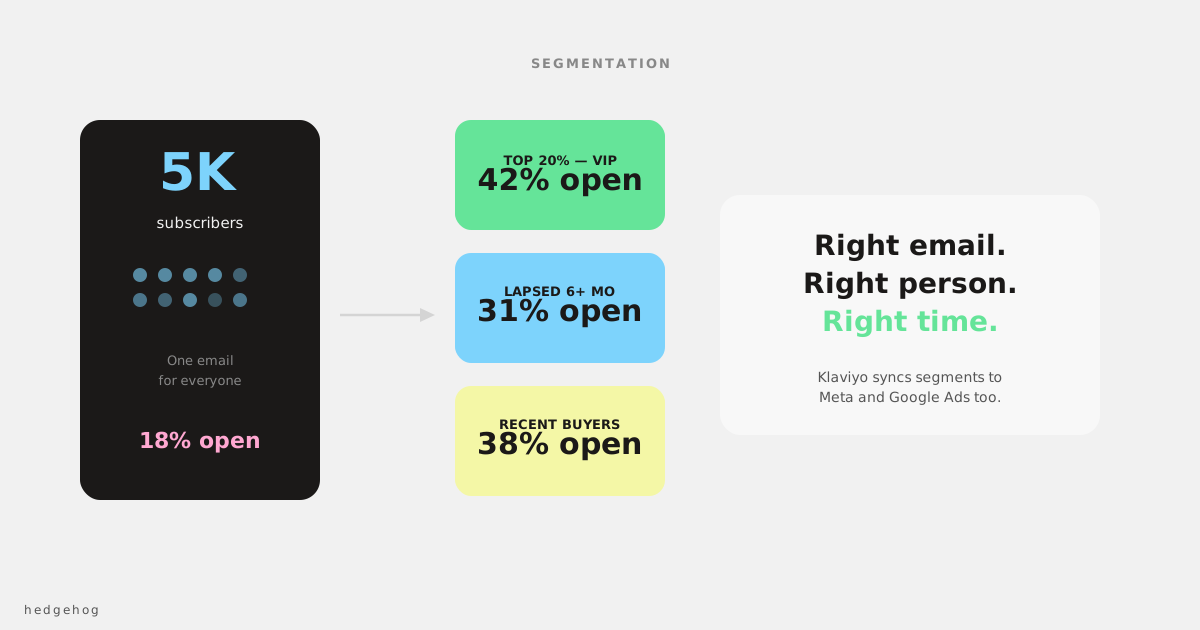
The practical upshot is that your promotional campaigns get smarter. Instead of sending your end-of-season sale to your entire list, you send a VIP version to your top 20% of customers, a "here's a reason to come back" version to people who haven't bought in six months, and skip the people who just bought last week. Open rates go up. Unsubscribes go down. Revenue per email sent goes up.
Klaviyo also syncs segments directly to Meta and Google Ads, so you can use the same customer intelligence for your paid campaigns. That's a meaningful advantage for stores running both email and paid social.
#Who Klaviyo is right for - and who it isn't
Right for:
- Any Shopify, WooCommerce, or BigCommerce store with a meaningful email list (even 500+ subscribers is enough to start seeing value)
- Stores doing recurring purchases or selling into a category with natural replenishment cycles
- E-commerce brands investing in retention and lifecycle marketing
- Businesses that have outgrown Mailchimp and need proper behavioural automation
Where Klaviyo isn't the answer: service businesses with no product catalogue, very small lists with no growth intent, and anyone who just needs to send a monthly newsletter. Kit or ActiveCampaign will serve those use cases better and cost less.
Klaviyo's pricing scales with list size, so it's not the cheapest option at larger volumes. But cost-per-email sent is the wrong way to evaluate a platform that's driving automation revenue. The question is what your flows return, not what the platform costs.
#What to expect from setup
Klaviyo setup takes time if you do it properly. The integration with your store platform is quick - usually a few minutes. The work is in building flows, writing the email copy, setting up segments, and configuring your sending domain for deliverability.
A realistic timeline for a well-set-up account from scratch: two to four weeks. That's assuming you're building three to five flows, a welcome series, and a set of core segments - not just connecting the store and calling it done.
If you're migrating from another platform, Klaviyo has import tools and the process is generally smooth. The main work is recreating your automations in Klaviyo's flow builder, which is worth the effort.
#Frequently Asked Questions
Is Klaviyo only for Shopify?
No. Klaviyo integrates with WooCommerce, BigCommerce, Magento, and a range of other platforms. The Shopify integration is the most mature, but the platform works well across e-commerce stacks.
How does Klaviyo pricing work?
Klaviyo charges based on the number of contacts in your account. The free plan covers up to 250 contacts and 500 email sends per month. From there, pricing scales with list size. Check Klaviyo's website for current pricing tiers.
Can I use Klaviyo for SMS as well as email?
Yes. Klaviyo handles both email and SMS, and you can build flows that use both channels in sequence. SMS is currently available in Australia, though the channel is more mature in the US market.
Do I need a developer to set up Klaviyo?
No. The interface is designed for marketers. The Shopify integration in particular is essentially plug-and-play. More complex customisations (like custom events or API integrations) may need developer help, but the core platform is very accessible.
What's the difference between Klaviyo and Mailchimp for e-commerce?
The main difference is depth of integration and behavioural triggering. Mailchimp can connect to Shopify but the data layer is thinner - you don't get the same granularity of product browsing data, and the flow builder is less sophisticated. For a store that's serious about lifecycle automation, Klaviyo is the stronger choice.
#Ready to get more from your email list?
Klaviyo is one of those tools where the gap between "set it up badly" and "set it up well" is significant. The platform gives you everything you need - the work is in knowing what to build, in what order, and how to write emails that actually convert.
If you're on Shopify and your email program is essentially a newsletter, you're using a formula one car to do the school run. The car can do more.
This guide is written by Hedgehog, a DIY digital marketing consultancy specialising in small and medium businesses in Australia. We offer digital marketing consulting, coaching and training.