There’s always a new marketing trend. A fresh platform. A shiny new tactic that promises to change everything. And every time one appears, there’s a pull to drop what you’re doing and chase it. But here’s the uncomfortable truth: most marketing trends won’t move the needle for your business. They’ll distract you from the work that actually matters.
Shiny Object Syndrome in marketing isn’t just annoying - it’s expensive. It burns budget, fragments your focus, and keeps you from building the sustainable foundations that drive real growth. This guide will help you recognise when you’re being distracted, understand why it happens, and refocus on what actually works.
#What Is Shiny Object Syndrome in Marketing?
Shiny Object Syndrome (SOS) is the habit of constantly jumping to the next big thing. A new platform launches. A competitor tries a new tactic. An influencer promises revolutionary results. And suddenly, your entire marketing strategy gets put on hold while you chase the trend.
It’s not that new ideas are bad. The problem is when they replace foundational work instead of complementing it. You abandon your email list to focus on TikTok. You pause your Google Ads to experiment with an unproven channel. You rebuild your website for the third time this year because someone said minimalism is dead.
SOS shows up when you’re always starting over. When your marketing feels chaotic. When you can’t point to anything you’ve consistently done for more than six months.
#Why Marketing Trends Feel So Tempting (But Rarely Deliver)
New trends are designed to grab attention. They’re packaged with case studies, big promises, and FOMO-inducing language. “Early adopters are seeing 10x ROI!” “This platform is about to explode!” “If you’re not on this, you’re already behind.”
It taps into a fear every business owner has: what if I’m missing the thing that could change everything?
But here’s what those hype cycles don’t tell you. Most viral marketing tactics work because of context you don’t have. The brand that “crushed it on TikTok” already had a massive audience elsewhere. The company that saw explosive growth from a new platform got in early with a huge budget and a dedicated team. The tactic that worked for them might flop for you - not because you did it wrong, but because your business, audience, and resources are different.
Trends also benefit from survivorship bias. You only hear about the wins. The thousands of businesses that tried the same thing and saw no results? They don’t write case studies.
#The Hype Cycle Most Trends Follow
Nearly every marketing trend follows the same arc: a rapid ascent driven by early wins and breathless coverage, a peak of inflated expectations, a crash into disillusionment when most businesses find the results don’t match the promise, and then - for the tactics that are actually solid - a slow climb to sustainable productivity.
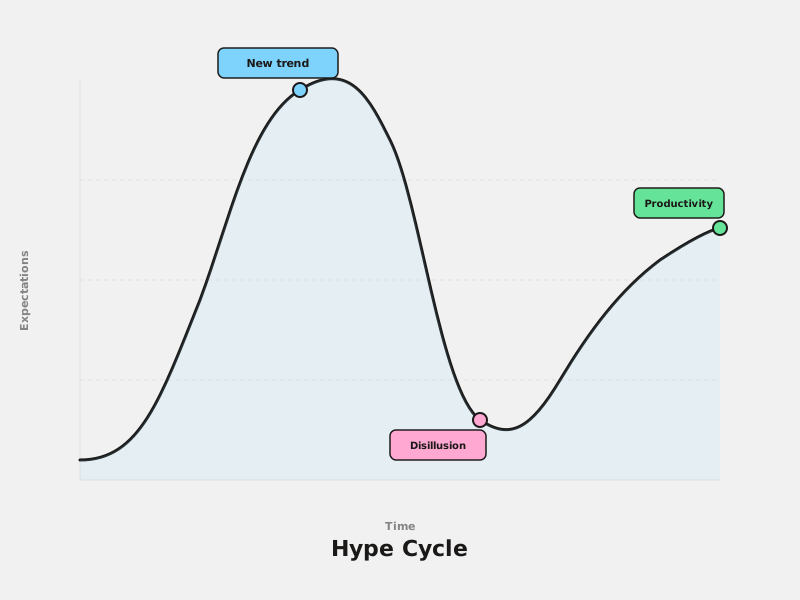
The tragedy of SOS is that businesses jump in at the peak - when the hype is loudest and the reality is farthest away - and bail at the trough, before they ever see the real results. The businesses that wait for the hype to settle, then adopt proven tactics methodically, consistently outperform the early adopters who thrash between platforms.
Why you only hear the wins
Successful businesses write blog posts about their TikTok strategy. Failed experiments stay quiet. The result is a systematically distorted picture of what marketing tactics actually work - one that over-represents winners and erases everyone who tried the same approach and got nothing.
When you see a case study about a brand that 10x’d their leads from a new channel, ask: how many other businesses ran the same playbook and published nothing because it flopped?
#The Real Cost of Chasing Every New Trend
Shiny Object Syndrome doesn’t just waste time. It actively damages your marketing.
It fragments your budget. Every new trend requires investment. Software subscriptions. Content creation. Ad spend. Design work. If you’re constantly starting fresh, you’re spreading thin instead of doubling down on what works.
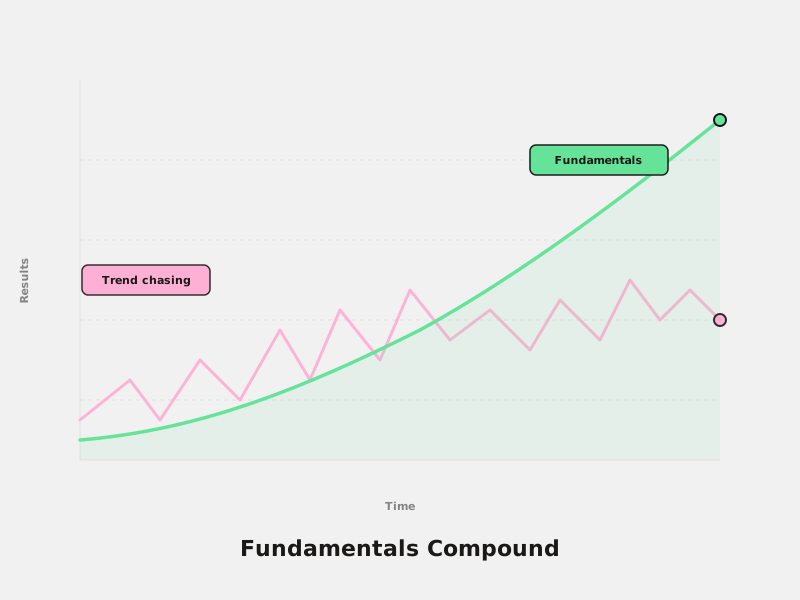
It kills momentum. Marketing compounds. The longer you run a consistent strategy, the stronger it gets. Your SEO improves. Your brand recognition grows. Your email list builds trust. But if you abandon tactics every few months, you never get to the payoff. You’re always back at square one.
It erodes brand equity. Your audience needs consistency to remember you. If your messaging, tone, and presence change every quarter, you’re not building a brand. You’re confusing people.
It stops you learning what actually works. When you chase trends, you never run anything long enough to get meaningful data. You can’t optimise what you don’t finish. You can’t improve what you keep abandoning.
#What Actually Moves the Needle: The Fundamentals That Work
The businesses that grow sustainably are the ones doing boring, unsexy work consistently.
Customer lifetime value beats acquisition
Retention is cheaper and more profitable than constantly hunting for new buyers. Email nurture sequences, loyalty programmes, and post-purchase follow-ups aren’t trendy. But they work. A customer who buys twice is worth far more than two customers who buy once and forget you exist.
Conversion rate optimisation compounds over time
A 2% improvement in your conversion rate might sound small. But if you’re driving steady traffic, that 2% adds up to serious revenue over a year. Tweaking your landing pages, testing your CTAs, and removing friction from your checkout process will always outperform jumping to a new platform.
Brand consistency builds trust
Showing up in the same places, with the same tone, solving the same problems for the same people - that’s how you become recognisable. Trends come and go. Your brand should be the constant.
Data-driven decisions beat gut feelings
You don’t need to guess what’s working. Google Analytics, your CRM, and your ad dashboards will tell you. The businesses that win are the ones that look at the data, double down on what’s performing, and cut what isn’t.
Strong fundamentals make trends optional. If your email list is converting, your SEO is driving traffic, and your ads are profitable, you can afford to experiment. But if your fundamentals are shaky, every trend becomes a distraction you can’t afford.
#How to Tell If a New Trend Is Worth Your Time
Not every trend is a waste of time. Some do create real opportunities - especially if you’re early and your audience is there. The trick is knowing when to explore and when to ignore.
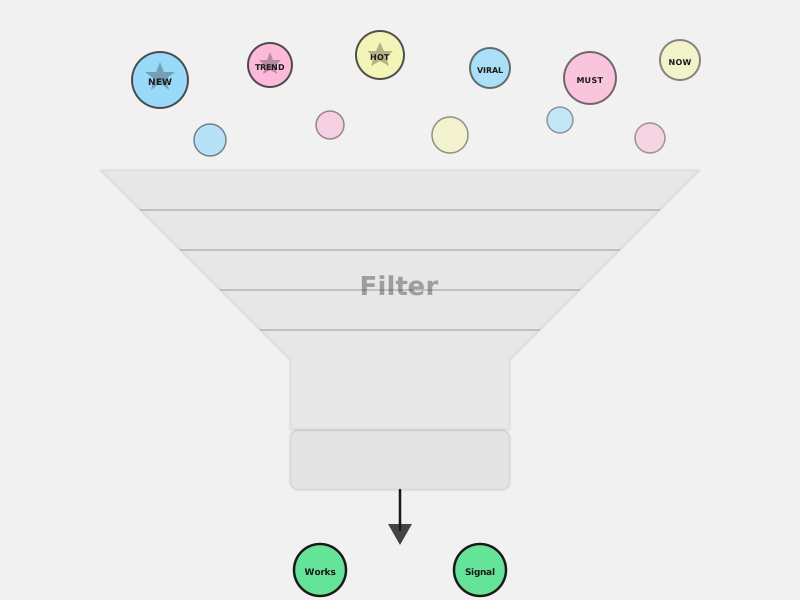
Before adopting any new marketing trend, run it through these four questions:
Does this align with where my customers already are? If your audience isn’t on the platform, the trend doesn’t matter. A B2B consultancy chasing TikTok trends when their buyers are on LinkedIn is wasting energy.
Can I test this without disrupting what’s already working? If adopting a new tactic means pausing something that’s driving ROI, the answer is no. Trends should add to your strategy, not replace it.
Do I have the resources to do this properly? Half-arsed execution of a trend is worse than not doing it at all. If you don’t have the time, budget, or expertise to commit, skip it.
Is there evidence this works for businesses like mine? Look for case studies from similar industries, audience sizes, and business models. If the only proof is from massive brands with unlimited budgets, it’s probably not replicable.
If a trend passes all four questions, run a proper test: set a time window, define success metrics upfront, and measure specific outcomes. If it works, scale it. If it doesn’t, cut it and move on without guilt.
#Frequently Asked Questions
How do I stop feeling like I’m falling behind when I see competitors trying new things?
Remember that what you see externally rarely tells the full story. Your competitor might be experimenting because they’re desperate, not because they’ve cracked the code. Focus on your own metrics. If your fundamentals are solid and your marketing ROI is healthy, you’re not falling behind - you’re staying disciplined.
Should I ever completely ignore new marketing trends?
No - but you should filter ruthlessly. Stay aware of what’s happening in your industry, but don’t feel obligated to act on everything. Most trends fade. The ones that stick around will still be there in six months when you’ve got the bandwidth to test them properly.
How long should I stick with a strategy before trying something new?
At minimum, give any tactic 90 days of consistent effort before evaluating. For slower-burn channels like SEO or email, you’re looking at 6–12 months. If something isn’t working after a fair test with proper execution, cut it. But don’t bail early just because results aren’t instant.
What if my industry moves fast and I need to stay on top of trends?
Even in fast-moving industries, fundamentals still matter. Build a foundation first: strong brand positioning, reliable lead generation, consistent customer communication. Once that’s in place, you can move faster on trends because you’re not starting from zero every time.
How do I convince my team to stop chasing trends and focus on fundamentals?
Show them the data. Pull reports on what’s actually driving revenue, leads, or conversions. Highlight the cost of abandoned projects and inconsistent efforts. Frame fundamentals as the strategy that reduces risk and increases predictability - two things leadership loves.
Marketing trends will keep coming. There will always be a new platform, a fresh tactic, a viral case study that makes you question your strategy. That’s not going to change.
What can change is how you respond. Instead of chasing every shiny new thing, build a marketing foundation that works. Focus on your customers, optimise what’s already performing, and make decisions based on data - not hype. When you’ve got that in place, trends stop being distractions. They become optional experiments you can afford to test.
Ready to focus on marketing that actually moves the needle? Book a free marketing audit. We’ll tell you exactly what’s working, what’s not, and what to do about it first.
