The algorithm is not your enemy. It's also not your friend. It's a machine that optimises for what you tell it to optimise for, and if you haven't told it the right thing, or if your data is too thin to make that optimisation meaningful, it will confidently spend your budget in the wrong direction.
This matters now more than it ever has, because the platforms are moving fast toward full automation. Google wants you to run Performance Max and trust Smart Bidding. Meta wants you to use Advantage+ and let the system handle targeting. In many cases, doing what the platform recommends actually works. In others, it works for the platform's revenue and not for yours.
Here's how to tell the difference.
What you'll learn in this post
- Where AI automation in paid media helps
- Where it quietly costs you
- The specific things to keep manual control over
- How to set up AI-assisted campaigns so the automation has something to work with
- The data conditions that need to exist before you hand anything over
Where automation helps
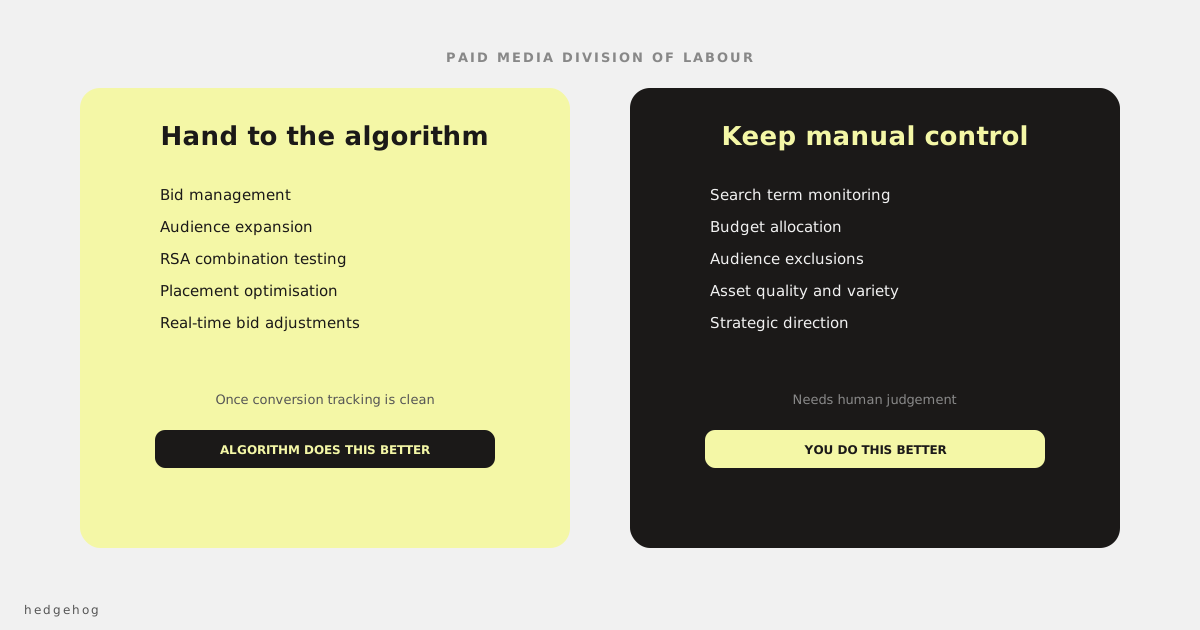
Bid management
Smart Bidding in Google Ads (Target CPA, Target ROAS, Maximise Conversions) outperforms manual bidding in most accounts with sufficient conversion volume. The algorithm processes thousands of real-time signals (device, location, time, query intent, audience behaviour) that no human can match manually. If you have 30+ conversions a month at a consistent value, Smart Bidding is worth using.
The condition: your conversion tracking must be accurate and attributing to the right event. Smart Bidding optimising for a micro-conversion (page views, time on site) when you actually care about purchases will produce impressive micro-conversion numbers and poor revenue results.
Audience expansion on Meta
Meta's Advantage+ audience, where you define a starting audience and let Meta find similar people, works well for businesses with a reasonable amount of conversion data in their pixel. The algorithm surfaces people you wouldn't have found with manual targeting, and in many accounts it outperforms rigidly constrained audience sets.
The condition: your pixel needs to be firing correctly and you need enough purchase or lead data for the algorithm to have something meaningful to optimise against. Without that, you're just paying Meta to guess.
Responsive Search Ads
Google's RSAs, where you provide up to 15 headlines and 4 descriptions and Google mixes and matches, outperform single-combination ads on reach and click volume in almost every account. The algorithm tests combinations you wouldn't have thought to test.
The condition: your headlines need to be different from each other (different messages, different hooks, different benefits) not the same idea rephrased 15 times. Feed it poor inputs and the combinations it tests will all be variations on mediocre.
Where automation quietly costs you
Creative decisions
Meta's dynamic creative (where you upload multiple images, videos, and copy variations and let the system combine them) will find the highest-CTR combination. CTR is not the same as conversion quality. The combination that drives the most clicks is not always the combination that drives the most customers. Keep your eyes on downstream metrics, not just platform performance scores.
More importantly: the creative itself needs to be yours. AI can test combinations of human-made creative. It cannot produce original, effective creative that speaks to your specific customer. Ads generated by AI image tools and AI copywriters, without significant human input, produce the same generic output as AI content elsewhere.
Budget allocation across campaigns
Letting the platform decide how to allocate budget across your account is tempting when you're time-poor. Resist it. Budget allocation is a strategic decision. It's the expression of which customers you most want to reach and which stages of the funnel matter most right now. Handing that to an algorithm means letting it optimise for efficiency (cost per conversion) when you may actually want to be investing in growth (new audience reach) or protection (brand search defence).
Set your budgets deliberately. Review them monthly.
Audience exclusions
This is the most commonly skipped manual task in automated campaigns. Performance Max by default will serve ads to your existing customers, to people who visited your website once three years ago, and in placements that don't make commercial sense. Exclusions are not automated: you have to set them manually and maintain them.
Without proper exclusions, you're paying to acquire customers you already have.
Search term monitoring in Google Ads
Even with Smart Bidding and broad match keywords, someone needs to be reviewing search terms and adding negatives. The algorithm optimises for the signals it has. It doesn't know that certain search categories are irrelevant to your business. A plumber running Google Ads should not be showing for "plumbing supplies trade" unless they sell to tradies. That's a human judgement call, not an algorithmic one.
The data conditions that need to exist before you automate
Every piece of AI automation in paid media works on a feedback loop. The algorithm observes results, adjusts behaviour, observes more results. If the results it's observing aren't meaningful, the adjustments it makes won't be either.
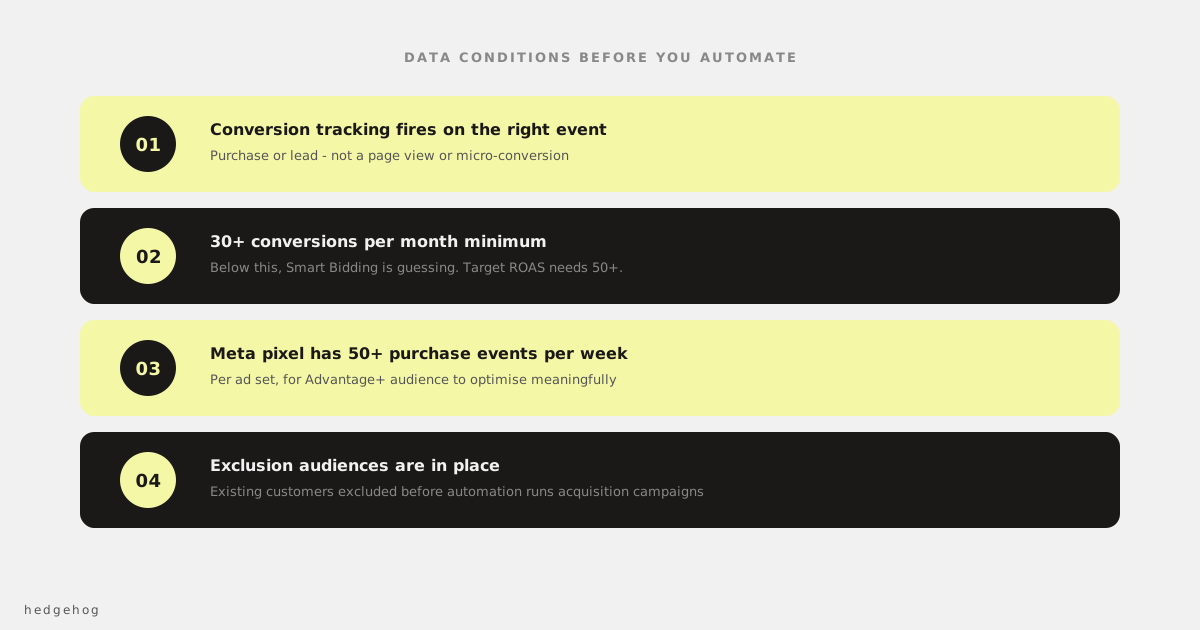
Before handing anything over to automation, check:
- Your conversion tracking is firing on the right event at the right stage of the funnel
- You have at least 30 conversions per month (more is better): below this, Smart Bidding is guessing
- Your pixel has sufficient purchase or lead data (Meta recommends 50 events per week per ad set for reliable optimisation)
- You have exclusion audiences set up so the algorithm isn't optimising against existing customers unless you specifically want it to
Fix measurement first. Then automate.
Frequently Asked Questions
Should I use Performance Max or Search campaigns? Both, in most cases, but not in the same account with overlapping goals. Search campaigns where you control keyword intent and ad copy alongside a PMax campaign for incremental reach is a common and effective structure. PMax running alone, without a well-configured asset group and proper exclusions, tends to cannibalise your best-performing search keywords while showing in lower-quality placements. We've written more on this at [the PMax vs Search post].
What is AI Max and should I use it? AI Max is Google's newest Smart Bidding variant that uses AI to expand keyword reach beyond exact match. It works on the same principle as broad match Smart Bidding but with more automated signal integration. It's worth testing in accounts with strong conversion data. Treat it as a test: set a specific budget, run it for 4-6 weeks, and compare performance to your existing Smart Bidding campaign before committing.
Meta keeps recommending I use Advantage+ Shopping Campaigns. Should I? Advantage+ Shopping consolidates your Meta e-commerce campaigns into a single AI-managed campaign. For accounts with strong pixel data and consistent purchase volume, it can outperform manually structured campaigns. For accounts with thin data or multiple distinct customer segments that need separate messaging, it removes control that matters. Test it against your existing structure rather than replacing it.
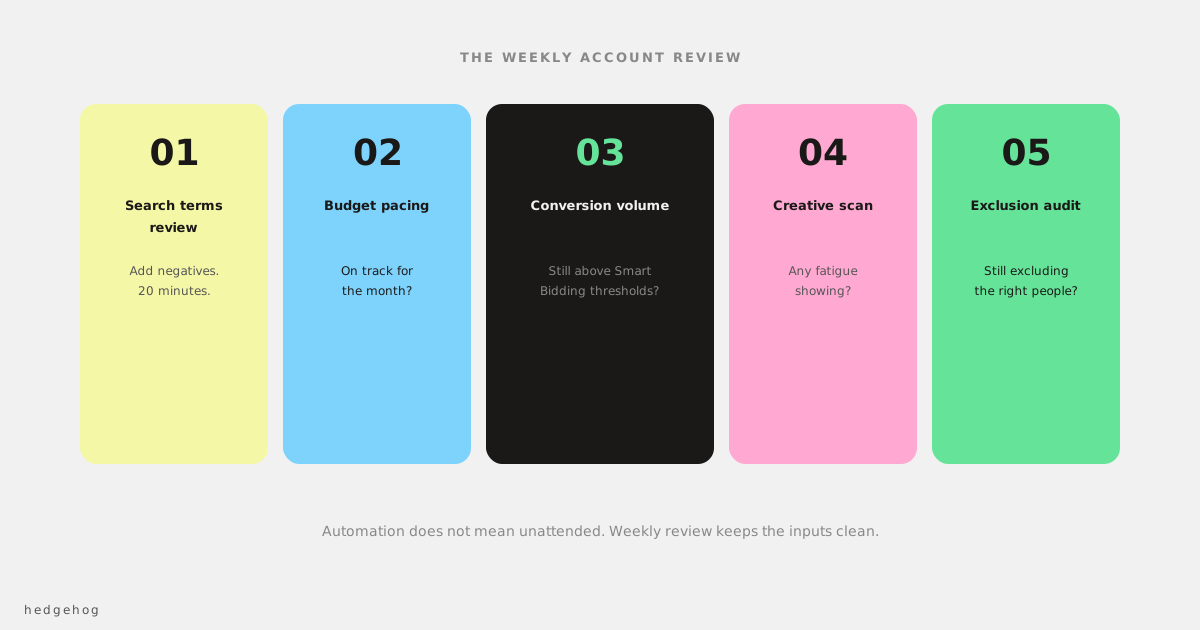
How often should I review automated campaigns? Weekly for budget and exclusions. Monthly for creative performance and audience sizing. Quarterly for structural review. Automation doesn't mean unattended: it means the tactical decisions are handled by the machine while the strategic decisions stay with you.
The short version
Hand over: bid management (once conversion tracking is solid), audience expansion (once pixel data is sufficient), creative combination testing.
Keep manual: budget allocation across campaigns, audience exclusions, search term monitoring, creative direction.
Fix measurement before automating anything. Review results weekly. The algorithm is a powerful tool. It works best when a human sets the parameters.
