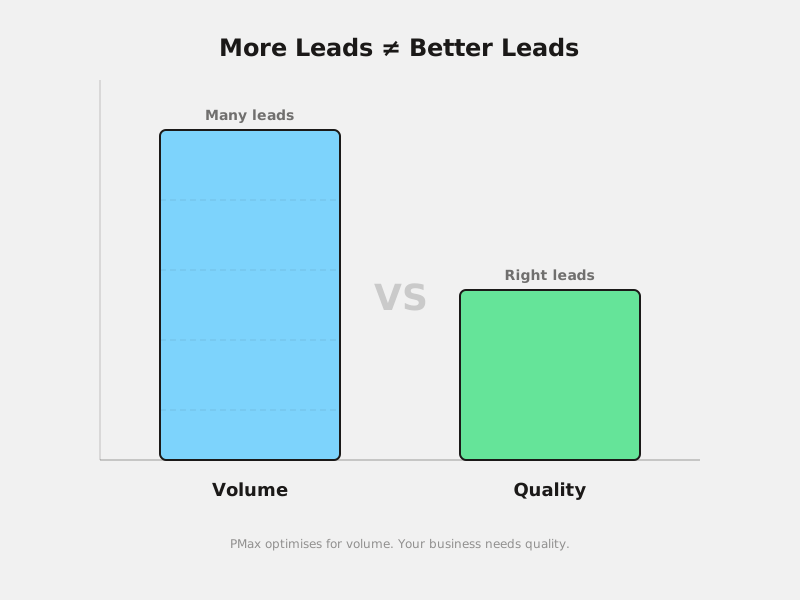
If your Google Ads performance looks stable but your sales outcomes feel worse, Performance Max may be widening intent further than your business can afford. We’re seeing this pattern repeatedly across client accounts. The issue rarely shows up in dashboards, but it’s obvious downstream.
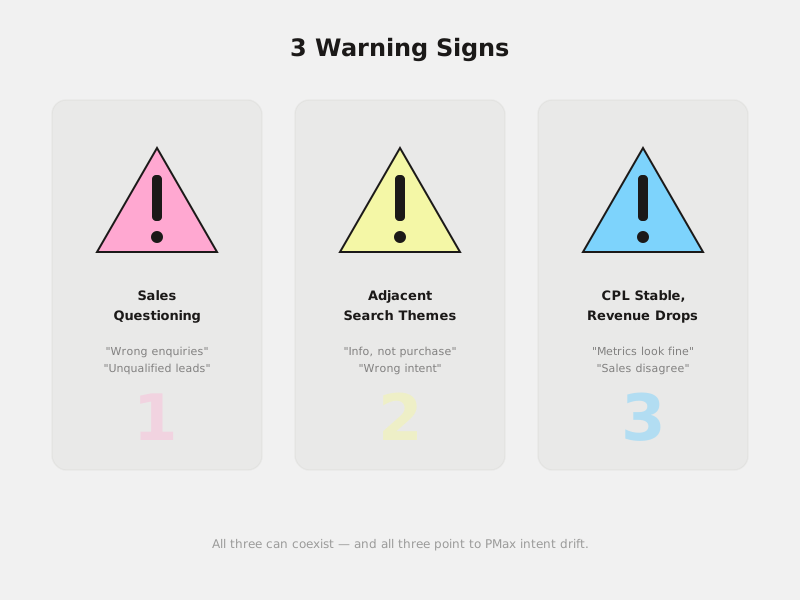
#Sign 1: Your Sales Team Is Questioning the Leads
This is almost always the earliest warning sign.
When we hear things like “these leads don’t really know what we do,” or “we’re getting more enquiries, but fewer serious buyers,” or “we’re spending more time qualifying than selling” - that’s an intent problem.
Performance Max optimises for conversion actions, not sales conversations. If your primary conversion is a form fill, the system doesn’t know or care whether that lead is price-sensitive, is researching rather than buying, or is even a good fit for the service.
If sales friction increases while ad metrics remain steady, intent drift is usually the cause.
#Sign 2: Search Themes Feel Adjacent, Not Commercial
Performance Max doesn’t show you keywords in the traditional sense, but patterns still emerge. Red flags include queries that sound informational rather than transactional, searches that match interest but not purchase intent, and themes you would never bid on manually in Search.
This is where many advertisers feel confused. They’ve added negative keywords, tightened messaging, and refined assets - yet the system continues to explore nearby intent. That’s because Performance Max is designed to test adjacency. It assumes some looseness is acceptable in exchange for scale.
For many businesses, it isn’t.
What “adjacent intent” looks like in practice
Think of a business selling commercial refrigeration equipment. Their PMax campaign starts attracting queries around home fridge repairs, restaurant kitchen planning, and food safety regulations. None of these are buyer signals. All of them get form fills from curious researchers. Every fill looks like a conversion in the dashboard.
The system isn’t broken. It’s doing exactly what it was built to do - casting a wide net for anything that resembles your conversion pattern. The problem is that wide nets catch a lot of things you don’t want.
#Sign 3: CPL Is Stable, But Revenue Quality Is Dropping
This is the most dangerous scenario. Cost per lead looks fine. Conversion volume hasn’t dropped. But revenue, close rate, or deal size is declining.
At this point, automation is doing its job too well. Performance Max will happily replace fewer high-quality leads with more lower-quality ones if the conversion signal stays consistent. The platform doesn’t see revenue. It sees probability.
If your business model depends on quality over quantity, this trade-off matters. Stable CPL with declining revenue is not a neutral outcome - it’s a slow bleed.
#Why This Happens in Performance Max
This isn’t a setup error or a temporary glitch. Performance Max is built to optimise across channels, expand reach aggressively, and trade precision for scale. That is the product. Negative keywords act as guardrails, not absolute blocks. The system is allowed to interpret intent, not just match terms.
That flexibility is powerful. It is also risky if your business model depends on qualifying leads before they hit your inbox.
The gap between “conversion” and “customer”
Google Ads measures a form fill. Your business measures a closed deal. Performance Max is optimising hard for the first thing without any visibility into the second. If you haven’t fed offline conversion data back into the platform - via Google Ads imported conversions or a CRM integration - then the system has no idea your lead-to-sale rate is dropping. It only knows it’s generating conversions.
This is the structural problem. The algorithm is working. The inputs are incomplete.
#What to Do Instead
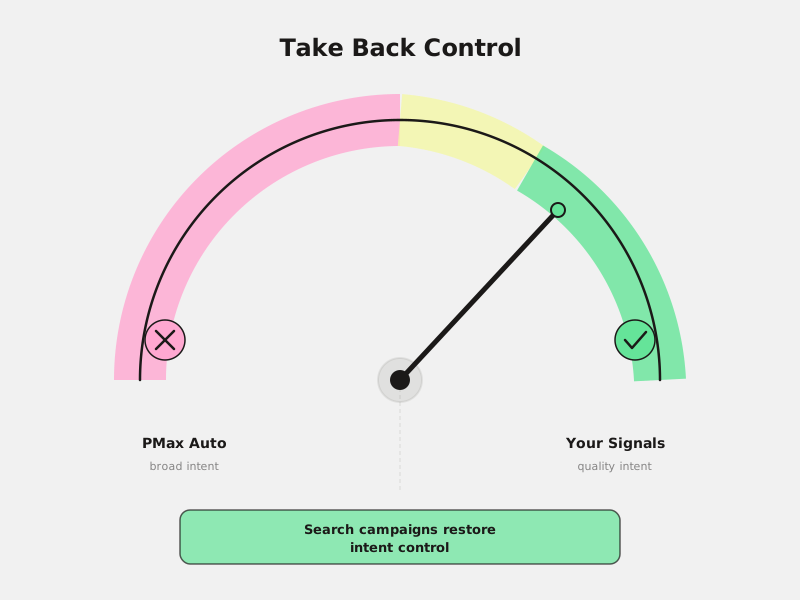
For most businesses, the solution is restoring balance.
That usually means reintroducing Search campaigns for core commercial intent, using Search to control exclusions and pricing sensitivity, and letting PMax support - rather than replace - high-intent traffic. This gives you cleaner lead quality, better intent signalling, and easier sales alignment.
Specific steps worth taking now
- Audit your search themes report in the PMax insights tab. Look for informational or irrelevant themes and exclude them via negative keyword lists at the account level.
- Import offline conversions if your sales cycle goes beyond the initial form fill. Qualified lead, booked appointment, or won deal - any of these gives PMax a better signal than a raw form submission.
- Add a parallel Search campaign targeting your highest-intent terms. Let PMax handle awareness and upper-funnel discovery while Search owns the commercial queries.
- Review close rate by campaign with your sales team monthly. If PMax leads consistently underperform Search leads, that data belongs in the conversation with whoever manages your account.
#Bottom Line
Performance Max is doing exactly what it was built to do. The question is whether your business can tolerate the noise that comes with it.
If intent matters, control still matters. The businesses that treat PMax as a supplement to Search - rather than a replacement for it - tend to hold their lead quality in a way that pure-PMax accounts don’t.
Not sure whether lead quality is slipping in your account? Book a Google Ads review and we’ll walk through it with you.