We’re at the halfway point. Six months of data sitting in your accounts, and most businesses are either not looking at it, or looking at the wrong things.
This isn’t a post about annual goals. It’s a specific 30-minute check you should do every July to make sure the next six months aren’t a repeat of the last.
Here’s what to look at.
#Key summary
- Most businesses reach July with six months of data they’ve never properly interrogated - this check fixes that in 30 minutes
- Pull actual business outcomes (leads, sales, cost per outcome) per channel - not platform vanity metrics
- Compare actual budget spend against the split you intended at the start of the year; drift should be deliberate, not accidental
- Identify your best and worst month by name and explain why - if you can’t, you don’t have enough visibility
- Check your primary optimisation metric maps to revenue, then consciously keep or drop unfinished H1 work before starting H2
#Channel performance vs goal
Pull your channel-level data for January through June. Not the dashboard summary your platform shows you - actual business outcomes.
For each active channel, ask three questions:
- How many leads or sales did this channel generate?
- What did it cost per lead or sale?
- Is that better or worse than where you started the year?
If you can’t answer question one, you have a measurement problem before you have a performance problem. Fix tracking before spending another dollar on optimisation.
The channels that are working deserve more budget in H2. The ones that aren’t need a diagnosis, not another six months of unchanged spend.
#Where your budget actually went
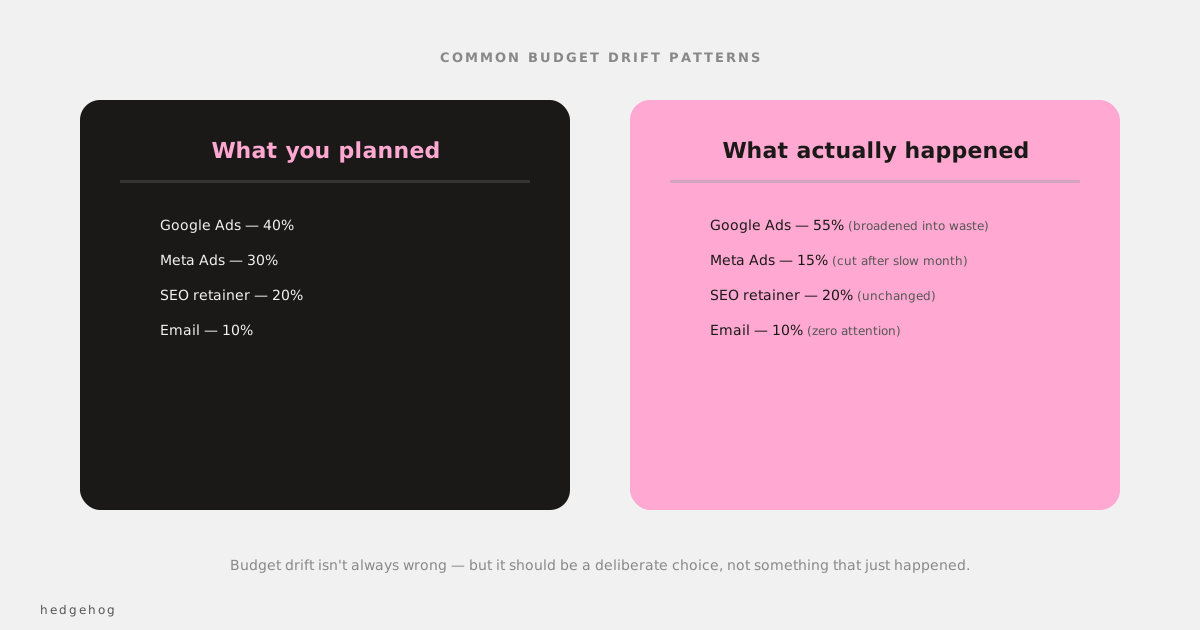
This one surprises people. Pull your actual spend by channel for H1 and compare it to your intended split at the start of the year. They’re almost never the same.
Common drift patterns:
- Google Ads eats more than planned because campaigns broadened into low-intent queries
- Meta gets cut after a slow month and never gets fully reinstated
- SEO sits at the same retainer regardless of what’s actually being delivered
- Email has near-zero cost but also near-zero strategic attention
Budget drift isn’t always wrong - sometimes a channel earned more investment. But it should be a deliberate choice, not something that just happened. Make it deliberate for H2.
#Your best and worst months
Pull monthly performance across the year so far. Identify your best month and your worst.
For the best month: what was different? Seasonality, a promotion, a campaign that landed, improved creative? If you can name it, you can plan for it.
For the worst month: was it external (industry slowdown, school holidays, economic softness) or internal (tracking broke, campaigns paused, creative went stale)? External you can anticipate. Internal you can fix.
If you can’t explain either month, you don’t have enough visibility into what’s actually driving results.
#Are you chasing the right metric?
Half the businesses we audit in July are optimising for something that doesn’t map to revenue.
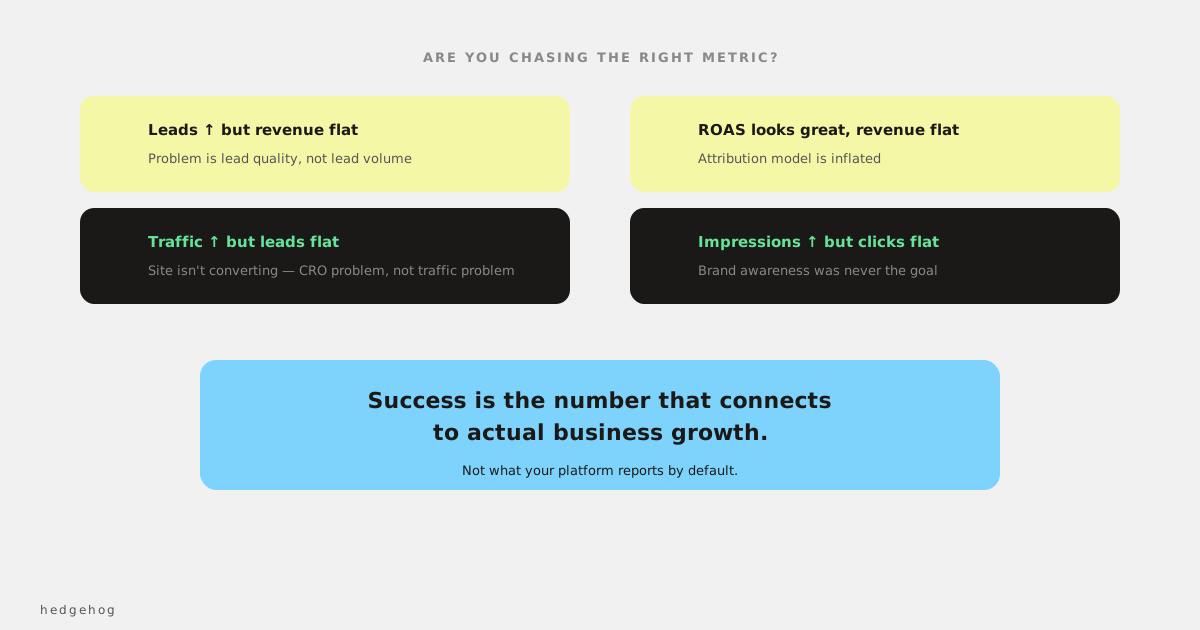
Common misalignments:
- Optimising for leads when the problem is lead quality
- Optimising for ROAS when the attribution model is inflated
- Optimising for traffic when the site isn’t converting it
- Optimising for impressions when brand awareness was never the goal
Success is not the metric your platform reports by default. It’s the number that connects to actual business growth. If you’re not sure what that is, that’s the first thing to fix in H2.
#What didn’t get done in H1?
Most businesses start the year with a list of things they intend to do - a new landing page, a welcome email sequence, a Google Ads restructure, a content calendar. Pull that list out and be honest about what actually happened.
Not to beat yourself up. To decide: does it still matter? If yes, schedule it with a real deadline. If no, drop it consciously rather than letting it sit and guilt-trip you for another six months.
#The 30-minute review
Here’s the actual process:
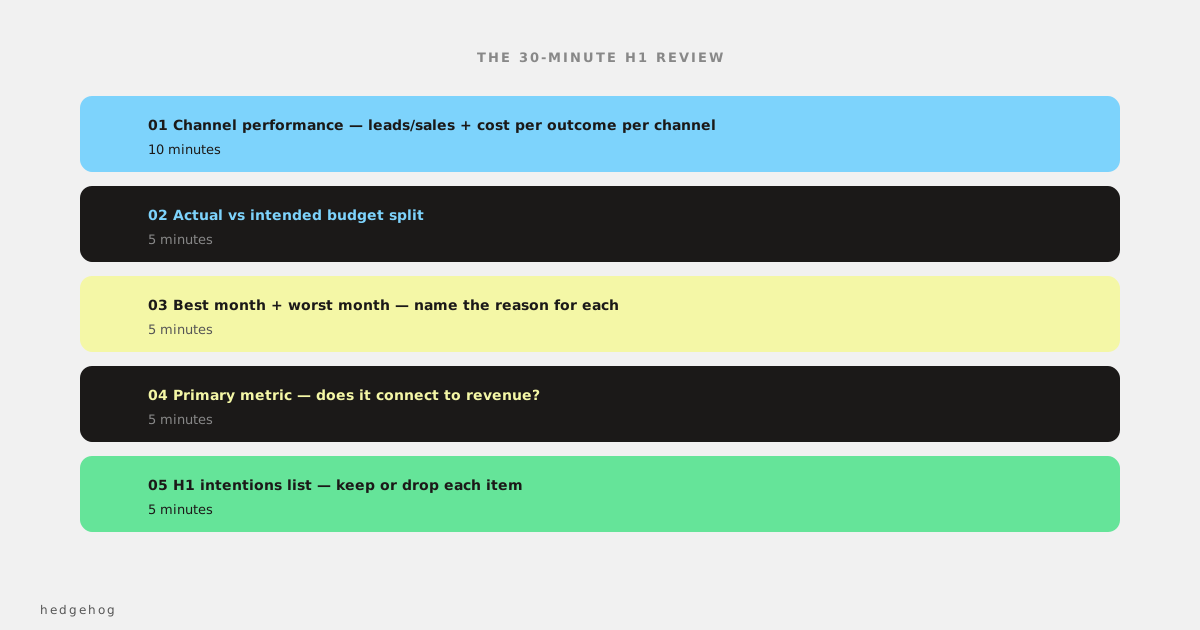
- Pull H1 channel performance (leads/sales + cost per outcome per channel) - 10 minutes
- Compare actual vs intended budget split - 5 minutes
- Identify best and worst month, note the reason for each - 5 minutes
- Check your primary metric against revenue - 5 minutes
- Review H1 intentions list, keep or drop each item - 5 minutes
That’s it. No deck required. No consultant needed. Just you, your data, and 30 honest minutes.
Most businesses never do this review. The ones that do are usually the ones still standing in five years.
H2 starts now.
