Every few years someone declares email marketing dead. Then the ROI data comes out and email is still sitting at the top of the chart, quietly outperforming every other digital channel.
The question isn't really whether email works. The question is whether your email marketing is working - and that's a very different conversation.
#What you'll learn in this post
- What email marketing ROI looks like in real terms
- Why most businesses underperform the benchmarks
- Which email activities return the most
- How to set realistic expectations for your program
- What it takes to actually get a return
#What the benchmarks say
Email marketing consistently returns more per dollar spent than any other digital marketing channel. Industry benchmarks typically cite $36–$42 AUD return for every dollar invested, though this varies significantly by industry and how well the program is set up.
For e-commerce, the figure is often higher. For service businesses, the ROI looks different because the conversion cycle is longer - you're nurturing over months, not triggering off a cart abandon. The return is real but it shows up in pipeline and retention metrics rather than immediate revenue.
The more important number is what your email program is actually returning. If you're not tracking revenue attributed to email, you're flying blind on one of your cheapest acquisition and retention channels.
#Why most businesses underperform
Here's the honest version: most small business email programs are mediocre not because email doesn't work, but because the program isn't set up to do the work.
The most common failure modes:
Sending to the whole list every time. One message for 5,000 people with different purchase histories, different interests, and different stages of the customer journey. Engagement drops, unsubscribes climb, and deliverability degrades quietly in the background.
No automation. Everything is manual. Someone has to sit down and write and schedule every email. That means you send when you have time, not when the customer is ready to hear from you. Abandoned carts go unrecovered. New subscribers get no welcome. Lapsed customers get no win-back.
List decay. A list that isn't cleaned and re-engaged gradually fills up with unengaged contacts who drag down your sender reputation. Emails land in spam. Open rates drop. The program looks like it's failing when really it just needs maintenance.
And almost nobody tests. Subject lines chosen by gut feel, send times never questioned. A single A/B test run monthly would improve results more than most redesigns.
None of these are hard to fix. They're just rarely prioritised until email performance forces the conversation.
#Where the returns actually come from
If you want to prioritise your effort, the highest-return activities in email marketing are generally:
Automations, not campaigns. A well-built welcome series, abandoned cart flow, or post-purchase sequence will outperform a manually sent promotional email almost every time. It runs without you, it's triggered by customer behaviour, and it compounds over time. Setting up three solid flows will typically return more than sending 12 newsletters.
Segmentation. Sending the right email to the right segment improves every metric - open rate, click rate, conversion rate - and reduces unsubscribes. Even basic segmentation (engaged vs unengaged, buyers vs non-buyers) makes a material difference.
Deliverability fundamentals. If your emails are going to spam, none of the above matters. Getting your sending domain authenticated (SPF, DKIM, DMARC), warming a new sending IP, and maintaining list hygiene aren't glamorous, but they're the foundation everything else sits on.
Subject lines. The biggest copy decision in email marketing is the subject line, because nothing else matters if no one opens the email. Testing subject lines is the fastest way to improve open rates without changing anything about the email itself.
#Setting realistic expectations
Email marketing returns don't typically show up overnight, especially for businesses starting from scratch or rebuilding a neglected program.
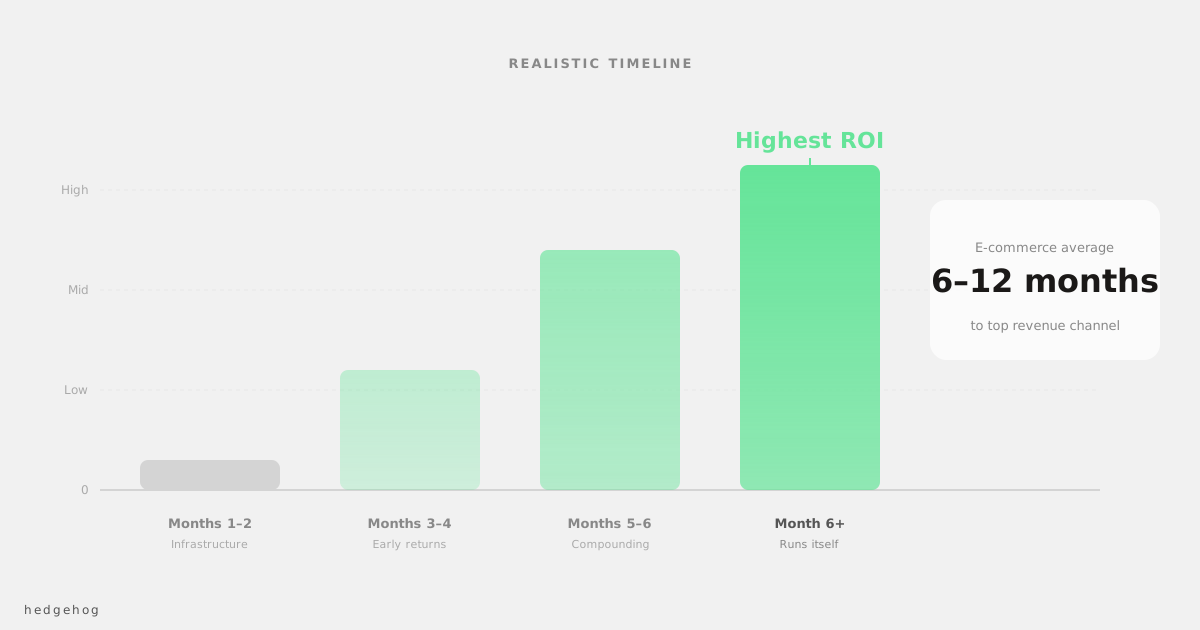
A realistic timeline looks something like this:
- Month 1–2: Platform setup, list segmentation, domain authentication, automation builds. No significant returns yet - this is infrastructure.
- Month 3–4: Flows are running, welcome series is live, campaigns are going out to segmented lists. Early data is coming in.
- Month 5–6: Optimisation based on what's working. Subject line testing, flow adjustments, segment refinements. Performance starts to compound.
- Month 6+: A well-run program that runs largely on autopilot and consistently drives attribution.
For e-commerce businesses with good automation in place, email often becomes the highest-revenue digital channel within six to twelve months. For service businesses, the timeline is longer because the purchase cycle is longer - but the retention value is often significant.
#What "worth it" actually depends on
Whether email marketing is worth the investment for your business depends on a few things:
Do you have (or can you build) a list? Email only works if people have opted in to hear from you. If you have an existing customer base you can email, that's your starting point. If you're building from zero, you'll need a lead magnet or opt-in strategy as part of the program.
Is your purchase cycle compatible with email nurturing? For e-commerce, almost always yes. For B2B services with long sales cycles, email is excellent for nurturing but the attribution is harder to track. For very transactional, one-off services, the ROI calculation is different.
Are you willing to do it properly? A mediocre email program - one list, no automation, no testing - will return mediocre results. The benchmarks that show $36 returns per dollar assume a program that's been set up and optimised. A neglected program returns much less.
The good news is that "doing it properly" doesn't require a large team or a massive budget. It requires setup, copy, and someone who actually looks at the numbers. That's it.
#Frequently Asked Questions
What's a good email open rate in Australia?
Average open rates vary by industry, but 20–30% is a reasonable benchmark for a well-maintained list. E-commerce tends to sit lower (15–25%); B2B and professional services often sit higher (25–40%). If you're below 15%, deliverability or list quality is usually the issue.
How often should I be emailing my list?
It depends on your audience and your content, but once a week is a common cadence for businesses with good content to share. Twice a month is fine if your content is high-quality. Once a month is probably not enough for most businesses - consistency matters for deliverability and for keeping the relationship warm.
How do I prove email ROI to a client or stakeholder?
Set up proper UTM tracking on all email links, connect your email platform to GA4, and track conversions by channel. For e-commerce, your platform (Shopify, etc.) should show revenue attributed to email directly. For service businesses, track leads and pipeline influenced by email.
Do I need a big list for email marketing to be worth it?
No. A small, engaged list outperforms a large, unengaged one every time. 500 subscribers who actually open and click your emails will return more than 5,000 people who barely notice you're in their inbox.
#The honest bottom line
Email marketing is worth it. For most businesses, it's the most cost-effective digital channel available - especially once automations are in place. But "worth it" assumes you've set it up to actually do the work.
If your email program is a monthly newsletter you send when you get around to it, you're not seeing what email can return. If you want to know what a properly built program would look like for your business, that's exactly what we help with.
This guide is written by Hedgehog, a DIY digital marketing consultancy specialising in small and medium businesses in Australia. We offer digital marketing consulting, coaching and training.